






Why Roses Need Special Care
Roses have been a favorite among gardeners for centuries thanks to their stunning flowers, incredible fragrance, and wide variety of colors and forms. While they’re sometimes considered difficult to grow, modern roses are much easier to care for than many people think.
- Why Roses Need Special Care
- Choose the Right Location
- Prepare the Soil Properly
- Water Deeply Instead of Frequently
- Feed Roses at the Right Time
- Mulch Around the Base
- Prune Every Year
- Deadhead Spent Flowers
- Watch for Common Rose Diseases
- Protect Roses from Common Pests
- Give Roses Enough Space
- Growing Roses in Containers
- Common Rose Growing Mistakes
- Frequently Asked Questions
Like any plant, roses perform best when their basic needs are met. Choosing the right location, maintaining healthy soil, and following a consistent care routine will reward you with vigorous growth and abundant blooms year after year.
Choose the Right Location
Location is one of the biggest factors in growing healthy roses.
Most rose varieties thrive in areas that receive at least 6 hours of direct sunlight each day, although many perform even better with 6–8 hours. Morning sun is especially valuable because it helps dry moisture from the leaves, reducing the risk of fungal diseases.


When choosing a planting spot, look for an area that offers:
- Plenty of direct sunlight
- Good air circulation
- Protection from extremely strong winds
- Well-drained soil
Avoid planting roses beneath large trees where they’ll compete for sunlight, water, and nutrients.
Prepare the Soil Properly
Healthy soil leads to healthy roses.
Roses prefer fertile, moisture-retentive soil that drains well. Before planting, improve the soil by mixing in generous amounts of compost or well-rotted organic matter.
If your soil is heavy clay, adding compost helps improve drainage. Sandy soil, on the other hand, benefits from extra organic matter to help retain moisture.
Water Deeply Instead of Frequently
One of the most common mistakes gardeners make is watering roses too often with small amounts of water.



Instead, water deeply so moisture reaches the entire root system.
General watering guidelines include:
| Rose Type | Watering Needs |
|---|---|
| Newly planted roses | Regular watering until established |
| Established garden roses | Deep watering during dry spells |
| Container roses | Water whenever the compost begins drying out |
Whenever possible, direct water at the base of the plant rather than spraying the leaves. Wet foliage encourages fungal diseases such as black spot and powdery mildew.
Feed Roses at the Right Time
Roses are heavy feeders and benefit from regular fertilizing during the growing season.
A typical feeding schedule looks like this:
| Time | Recommended Care |
|---|---|
| Early spring | Apply rose fertilizer before active growth begins |
| After the first flush of flowers | Feed again to encourage repeat blooming |
| Late summer | Reduce feeding as the growing season ends |
Adding compost or well-rotted manure around the base of your roses each spring also helps improve soil health while supplying nutrients gradually.
Mulch Around the Base
Applying mulch is one of the easiest ways to improve rose health.
Benefits include:



- Conserves soil moisture
- Reduces weeds
- Keeps roots cooler during summer
- Improves soil structure over time
- Reduces soil splash that can spread fungal diseases
Organic mulches such as bark chips, compost, or well-rotted manure work particularly well for roses.
Prune Every Year
Annual pruning keeps roses healthy, encourages fresh growth, and improves flowering.
During pruning:
- Remove dead branches.
- Cut away diseased or damaged stems.
- Remove crossing branches.
- Open the center of the plant to improve airflow.
- Shape the plant evenly.
Most garden roses are pruned in late winter or early spring before vigorous new growth begins. Clean, sharp pruning tools produce healthier cuts and reduce the risk of disease.
Deadhead Spent Flowers
Deadheading simply means removing faded blooms before they begin producing seeds.
This encourages many repeat-flowering roses to continue producing new flowers instead of putting energy into developing rose hips.
Regular deadheading throughout the season often results in longer flowering periods and a tidier-looking plant.
Watch for Common Rose Diseases
Even healthy roses can occasionally develop diseases, especially during warm, humid weather.
Some of the most common problems include:
| Disease | Common Symptoms |
|---|---|
| Black Spot | Black spots followed by yellow leaves |
| Powdery Mildew | White powdery coating on leaves |
| Rust | Orange or brown spots on foliage |
| Dieback | Stems turning brown or black |
Good air circulation, proper watering, regular pruning, and removing infected leaves all help reduce disease pressure. Never leave diseased leaves on the ground, as many fungal spores survive there and can reinfect plants the following season.
Protect Roses from Common Pests
Several insects enjoy feeding on roses.
Keep an eye out for:
- Aphids
- Spider mites
- Thrips
- Japanese beetles
- Sawfly larvae
Inspect new growth regularly, especially during spring and early summer. Catching pests early usually makes them much easier to control.
Give Roses Enough Space
Crowded roses are much more likely to develop fungal diseases.
Proper spacing allows:
- Better airflow
- Faster drying after rain
- Easier pruning
- Improved sunlight penetration
Avoid planting roses too close together or surrounding them with dense shrubs that restrict air movement.
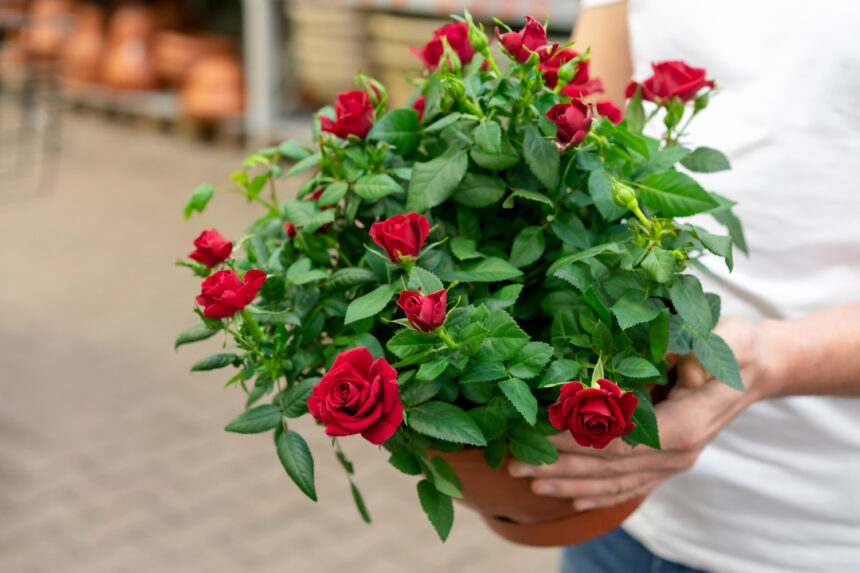
Growing Roses in Containers
Not everyone has room for a traditional rose garden, but many roses grow beautifully in containers.
For the best results:
- Choose a large pot with drainage holes.
- Use high-quality potting mix.
- Water more frequently than in-ground roses.
- Feed regularly during the growing season.
- Repot every few years if roots become crowded.
Container-grown roses generally require more attention because their soil dries out faster than garden beds.
Common Rose Growing Mistakes
Avoid these common errors if you want healthier, longer-lasting blooms.
| Mistake | Better Approach |
|---|---|
| Planting in too much shade | Choose a sunny location |
| Watering the leaves | Water at soil level |
| Skipping annual pruning | Prune every year |
| Overcrowding plants | Leave enough spacing for airflow |
| Ignoring faded flowers | Deadhead regularly |
| Leaving diseased leaves on the ground | Remove and dispose of infected foliage |
| Overfeeding with nitrogen | Use a balanced rose fertilizer |
Frequently Asked Questions
How much sunlight do roses need?
Most roses perform best with at least six hours of direct sunlight every day, although additional sunlight often produces stronger flowering.
How often should I water roses?
Established roses usually need deep watering during dry periods rather than frequent light watering. Newly planted roses require more regular watering until their roots become established.
Why aren’t my roses flowering?
Poor flowering may result from insufficient sunlight, incorrect pruning, inadequate feeding, drought stress, or allowing spent blooms to remain on repeat-flowering varieties.
What’s the biggest mistake beginners make with roses?
One of the most common mistakes is watering the foliage instead of the soil. Wet leaves increase the risk of fungal diseases such as black spot, especially when combined with poor air circulation.