





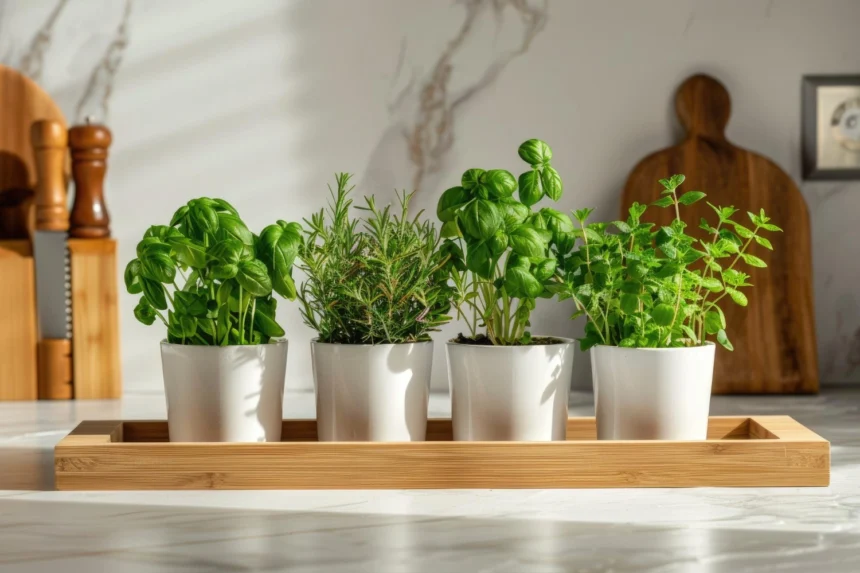
Why Grow Herbs Indoors?
An indoor herb garden is one of the easiest ways to enjoy fresh ingredients all year round. Besides adding flavor to your meals, herbs also bring greenery, fragrance, and a touch of nature into your home.
- Why Grow Herbs Indoors?
- Create a Classic Kitchen Windowsill Garden
- Grow Herbs on Floating Shelves
- Design a Dedicated Herb Cart
- Build a Vertical Herb Garden
- Use Matching Containers for a Modern Look
- Mix Practical Herbs With Decorative Ones
- Grow Each Herb in Its Own Pot
- Try a Tiered Plant Stand
- Add Grow Lights for Year-Round Herbs
- Use Decorative Labels
- Combine Herbs With Edible Flowers
- Create a Mini Herb Garden for Small Apartments
- The Best Herbs for Indoor Gardens
- Simple Styling Tips
- Indoor Herb Care Basics
- Common Mistakes to Avoid
- Frequently Asked Questions
Whether you live in an apartment or simply want herbs within arm’s reach while cooking, growing them indoors is both practical and rewarding. Most culinary herbs thrive in containers and don’t need much space to flourish.
Create a Classic Kitchen Windowsill Garden
The simplest indoor herb garden is also one of the most effective.
Place a row of small pots on a sunny windowsill where the plants receive at least 6–8 hours of direct sunlight each day.
Great herbs for this setup include:
- Basil
- Parsley
- Chives
- Thyme
- Oregano
A south-facing window usually provides the best light, although bright east- or west-facing windows can also work.
Grow Herbs on Floating Shelves
If your windowsill is crowded, floating shelves installed beside a bright window create an attractive and practical alternative.
Arrange herbs at different heights to create visual interest while ensuring every plant receives enough light.
Mix different leaf colors and textures for an eye-catching display, such as:
- Purple basil
- Curly parsley
- Silver-green sage
- Bright green mint
Design a Dedicated Herb Cart
A rolling utility cart can become a portable herb garden.

This idea works especially well because you can:
- Move herbs closer to sunlight.
- Rotate plants easily.
- Bring them near the kitchen while cooking.
- Relocate them away from cold windows during winter.
Adding small labels to each pot creates a tidy, organized appearance.
Build a Vertical Herb Garden
Limited counter space doesn’t mean you have to give up on growing herbs.
A vertical setup makes excellent use of wall space.
Popular options include:
- Wall-mounted planters
- Tiered plant stands
- Hanging pocket planters
- Ladder shelves
This style works particularly well in apartments where floor space is limited.
Use Matching Containers for a Modern Look
Sometimes simplicity makes the biggest impact.
Choose identical pots in materials such as:

- Terracotta
- White ceramic
- Matte black
- Concrete
- Stone-effect finishes
Matching containers instantly create a clean, designer-inspired herb garden that complements modern kitchens.
Mix Practical Herbs With Decorative Ones
Instead of growing only cooking essentials, combine herbs with different shapes and fragrances.
For example:
| Herb | Why It’s Worth Growing |
|---|---|
| Basil | Excellent for everyday cooking |
| Rosemary | Evergreen structure and fragrance |
| Chives | Compact growth and edible flowers |
| Thyme | Cascading habit in containers |
| Mint | Refreshing scent and fast growth |
| Lemon Balm | Bright citrus aroma |
This combination creates an indoor display that’s both beautiful and useful.
Grow Each Herb in Its Own Pot
It may be tempting to plant several herbs together, but this isn’t always the best idea.
Different herbs often have different watering needs.
For example:
- Rosemary prefers drier soil.
- Thyme dislikes excess moisture.
- Basil likes consistently moist soil.
- Mint requires more frequent watering.
Keeping each herb in its own container makes care much easier and reduces the risk of overwatering or underwatering certain plants.
Try a Tiered Plant Stand
Tiered stands are ideal for displaying several herbs without taking up much floor space.
Place taller herbs such as rosemary or dill on the upper shelves and shorter plants like thyme or chives below.
Rotate pots every week so each plant receives even sunlight.
Add Grow Lights for Year-Round Herbs
Natural light isn’t always enough, especially during winter.
If your home doesn’t receive several hours of direct sunshine each day, a simple LED grow light can make a huge difference.
Grow lights help:
- Prevent leggy growth.
- Encourage fuller plants.
- Extend harvesting through winter.
- Support sun-loving herbs like basil and rosemary.
Many compact grow lights are designed specifically for kitchen counters or shelving units.
Use Decorative Labels
Labels aren’t just practical—they also add personality.
Popular options include:
- Chalkboard stakes
- Wooden markers
- Metal labels
- Ceramic name tags
Besides helping identify young herbs, labels create a polished, cohesive appearance.
Combine Herbs With Edible Flowers
For a more decorative indoor garden, consider pairing herbs with edible flowers grown in separate containers.
Examples include:
- Nasturtiums
- Calendula
- Violas
These flowers brighten the display while also being useful in salads and as garnishes.
Create a Mini Herb Garden for Small Apartments
Even the smallest apartment can accommodate fresh herbs.
A compact setup might include just four pots:
- Basil
- Chives
- Parsley
- Thyme
This combination covers a wide range of everyday recipes while requiring very little space.
Recent gardening experts also recommend limiting indoor collections to just a few herbs at first, as it’s easier to provide enough light and care for a smaller group.
The Best Herbs for Indoor Gardens
| Herb | Easy for Beginners | Suitable for Containers | Best Light |
|---|---|---|---|
| Basil | ✅ | ✅ | Full sun |
| Parsley | ✅ | ✅ | Sun to partial shade |
| Chives | ✅ | ✅ | Sun to partial shade |
| Thyme | ✅ | ✅ | Full sun |
| Oregano | ✅ | ✅ | Full sun |
| Mint | ✅ | ✅ | Bright indirect light to partial sun |
| Rosemary | ✅ | ✅ | Full sun |
| Cilantro | ✅ | ✅ | Full sun |
| Sage | ✅ | ✅ | Full sun |
| Lemon Balm | ✅ | ✅ | Sun to partial shade |
Simple Styling Tips
A few design touches can turn ordinary herb pots into an attractive feature.
Consider:
- Using pots in the same color palette.
- Mixing different plant heights.
- Choosing natural materials like wood and terracotta.
- Displaying herbs on wooden trays.
- Keeping frequently used herbs closest to the kitchen workspace.
The goal is to create a space that’s both functional and visually appealing.
Indoor Herb Care Basics
Once your garden is set up, ongoing care is surprisingly straightforward.
Remember to:
- Water according to each herb’s needs rather than on a fixed schedule.
- Harvest regularly to encourage bushier growth.
- Remove flower buds from basil if you want continued leaf production.
- Rotate pots every week for even growth.
- Feed lightly during the active growing season if plants are in containers.
Most indoor herb problems are caused by insufficient light or excessive watering rather than a lack of fertilizer.
Common Mistakes to Avoid
| Mistake | Better Approach |
|---|---|
| Growing all herbs in one container | Keep herbs with different watering needs in separate pots |
| Using pots without drainage | Always choose containers with drainage holes |
| Overwatering | Check the soil before watering |
| Keeping herbs too far from a window | Place them where they’ll receive maximum light |
| Harvesting too much at once | Pick small amounts regularly |
| Ignoring plant rotation | Turn pots weekly for balanced growth |
Frequently Asked Questions
Which herbs grow best indoors?
Basil, parsley, chives, thyme, oregano, mint, and cilantro are among the easiest herbs to grow indoors because they adapt well to containers and indoor conditions.
Do indoor herbs need direct sunlight?
Most culinary herbs perform best with 6–8 hours of direct sunlight each day. If natural light is limited, LED grow lights are an excellent alternative.
Can I grow multiple herbs together?
You can, but it’s generally easier to grow each herb in its own pot since different species have different watering and growing requirements.
What’s the easiest indoor herb for beginners?
Chives, basil, parsley, and mint are all excellent choices. They’re relatively forgiving, grow well in containers, and are useful in a wide variety of recipes.