





For a long time, education was commonly imagined as something with a clear ending. You went to school, perhaps attended university or completed professional training, earned your qualifications, and then entered the working world.
- What Is Lifelong Learning?
- Why Has Lifelong Learning Become So Important?
- Lifelong Learning Can Help Your Career
- It Helps You Adapt to Change
- Learning Can Improve Confidence
- Lifelong Learning Isn’t Only About Employment
- Formal vs. Informal Lifelong Learning
- How to Become a Lifelong Learner
- Don’t Try to Learn Everything
- Frequently Asked Questions
- Education Doesn’t Have to Have a Finish Line
Real life rarely works that way anymore.
Technology changes, industries evolve, careers take unexpected turns, and new information can transform what we thought we knew. At the same time, people continue developing interests and abilities that have nothing to do with their jobs. Lifelong learning recognizes that education doesn’t have to stop when formal schooling ends.
It can happen at 25, 45, or 75, inside a classroom or entirely on your own.



What Is Lifelong Learning?
Lifelong learning is the continuous development of knowledge, skills, and abilities throughout a person’s life. It includes formal education, but extends far beyond degrees and qualifications.
Someone completing a professional certification is a lifelong learner. So is a retiree learning another language, a manager improving their leadership skills, a parent taking a cooking course, or someone teaching themselves photography through books, practice, and online tutorials.
Learning can be professional or personal, structured or informal.
The central idea is that your current knowledge is not the final version of what you can know or do.
Why Has Lifelong Learning Become So Important?
The modern workplace changes quickly. Artificial intelligence, automation, digital platforms, cybersecurity, data analysis, and other technologies continue to alter how many jobs are performed.
The World Economic Forum’s Future of Jobs Report 2025 estimated that 39% of workers’ existing skill sets would be transformed or become outdated between 2025 and 2030. Employers surveyed for the report also identified skills gaps as a major barrier to business transformation.



That doesn’t mean everyone needs to become a programmer or AI engineer.
It means the ability to learn, adapt, and develop new competencies can itself become a professional advantage. A career may last several decades, while the tools used within that career can change many times.
Lifelong Learning Can Help Your Career
Continuous learning can help you remain useful as your profession evolves.
An accountant might learn new AI-assisted financial tools. A marketer could develop stronger analytics skills. A designer may learn emerging creative software, while a manager might improve their understanding of leadership, negotiation, or project management.
Sometimes learning strengthens your current career. At other times, it creates a path into an entirely different one.
This matters because career development isn’t always vertical. Progress doesn’t necessarily mean remaining in the same profession and pursuing increasingly senior job titles. You may discover another field that suits your interests, circumstances, or abilities better.
New skills give you more options.
It Helps You Adapt to Change
Change becomes more difficult when your entire professional identity depends on doing something exactly as you’ve always done it.


Lifelong learners become accustomed to being beginners.
They encounter unfamiliar terminology, make mistakes, ask questions, and gradually become competent. Repeating that process can make future changes feel less threatening because learning something new is no longer an unusual event.
This adaptability matters outside employment too.
Financial services move online. Government services become digital. Communication platforms change. New forms of fraud emerge. AI becomes integrated into everyday software.
Learning helps you navigate the world rather than simply hoping it stops changing.
Learning Can Improve Confidence
Confidence doesn’t always come from telling yourself that you’re capable.
Sometimes it comes from evidence.
Imagine believing for years that you’re “bad with technology” and then learning how to build a website. Or assuming you’re incapable of learning languages and eventually holding your first real conversation in Spanish.
Experiences like these can change how you interpret future challenges.
Instead of thinking, “I don’t know how to do this, therefore I can’t,” you can think, “I don’t know how to do this yet, so what would I need to learn?”
That is a very different starting point.
Lifelong Learning Isn’t Only About Employment
Reducing lifelong learning to career development misses much of its value.
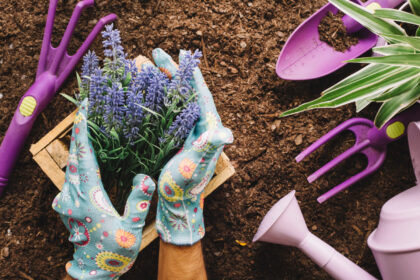
You can learn gardening because you want better tomatoes. Study history because a particular period fascinates you. Learn guitar because you’ve always wanted to play your favorite songs. Take a first-aid course because the knowledge could be useful.
Not everything needs to improve your résumé or increase your income.
Personal learning can introduce new hobbies, communities, experiences, and ways of understanding the world. It can also give adults something many people gradually lose after formal education: the pleasure of becoming better at something simply because it interests them.
Formal vs. Informal Lifelong Learning
Learning doesn’t require enrolling in university every few years.
Formal lifelong learning might include degrees, professional qualifications, accredited courses, workplace training, or certifications. These options are particularly useful when a profession requires recognized credentials.
Informal learning can include books, podcasts, documentaries, online tutorials, mentorship, professional communities, personal projects, volunteering, travel, and conversations with knowledgeable people.
Neither approach is automatically superior.
If you want to become a licensed professional, formal education may be essential. If you want to learn basic photography, an inexpensive course and thousands of photographs may teach you more than pursuing another academic qualification.
Choose the method according to the goal.
How to Become a Lifelong Learner
Start with something useful or genuinely interesting rather than trying to “learn more” in general.
Choose one skill or subject and define a concrete outcome. Instead of “learn coding,” you might aim to build a simple website. Instead of “learn Italian,” aim to have a ten-minute conversation about everyday topics.
Then create regular time for learning.
You don’t need several hours every day. Reading for 20 minutes, practicing a language during your commute, or spending two focused sessions each week on a professional course can accumulate into substantial progress over a year.
Most importantly, combine learning with application. Use the new software, speak the language, cook the recipe, build the project, write the article, or practice the skill.
Knowledge becomes more durable when it leaves the lesson and enters real life.
Don’t Try to Learn Everything
Modern access to information creates a strange problem: there is always another useful skill you could theoretically learn.
You don’t need all of them.
Trying to learn programming, investing, public speaking, graphic design, artificial intelligence, Mandarin, photography, and advanced Excel simultaneously is likely to produce exhaustion rather than impressive personal development.
Prioritize.
Ask what would meaningfully improve your life, career, or understanding right now. Focus on that long enough to make genuine progress before adding another major goal.
Lifelong learning is a long-term philosophy, not a race to collect courses.
Frequently Asked Questions
What is an example of lifelong learning?
Learning a foreign language as an adult is a simple example. You might use classes, an app, books, videos, conversation practice, and travel to gradually improve over several years.
Professional development also counts. Someone learning new software required by their industry is participating in lifelong learning even if the training doesn’t lead to another degree.
Is lifelong learning only for career development?
No. Career development is one important reason to continue learning, but personal interests are equally valid. Music, art, cooking, gardening, history, languages, financial literacy, technology, crafts, and countless other subjects can become lifelong learning projects.
Learning doesn’t need an economic return to have value.
What skills are important for lifelong learning?
Curiosity, self-discipline, critical thinking, information literacy, adaptability, and the ability to learn independently are particularly useful. Being willing to ask questions and admit that you don’t understand something also matters.
As information becomes easier to access, evaluating its reliability becomes increasingly important. Finding an answer is useful; knowing whether that answer deserves to be trusted is a separate skill.
Am I too old to learn something new?
No. Learning can continue throughout adulthood, although learning experiences and strategies may change with age.
You also don’t need to become an expert for learning to be worthwhile. A 60-year-old beginner pianist doesn’t need to become a concert performer for learning the piano to add something meaningful to life.
Education Doesn’t Have to Have a Finish Line
Lifelong learning doesn’t mean spending your entire life taking examinations or constantly worrying that your skills aren’t good enough. It means remaining willing to develop when your career, circumstances, or curiosity gives you a reason to do so.
Some learning will protect your professional relevance. Some will help you adapt to technological and social change. Other learning will have no purpose beyond making your life more interesting.
All of those reasons count.
Formal education may eventually end, but your ability to become more knowledgeable, capable, and curious doesn’t have to end with it.