







It is tempting to answer the question of when refrigerator invented with a single year and a single inventor. The real history of refrigerator technology, however, is much more interesting. Today’s refrigerator resulted from centuries of experiments in cooling, thermodynamics, ice production, engineering, electricity, and food preservation.
- Before Refrigerators: How Did People Keep Food Cold?
- The Scientific Breakthrough: Artificial Refrigeration
- Oliver Evans and the Vapor Compression Idea
- Jacob Perkins Built an Early Mechanical Refrigeration Machine
- John Gorrie and the Ice-Making Machine
- Carl von Linde Made Refrigeration Commercially Practical
- When Did the Electric Refrigerator Appear in Homes?
- The Absorption Refrigerator Offered Another Approach
- Why 1927 Was a Turning Point
- How Refrigerators Changed Food Preservation
- From a Cold Cabinet to the Modern Refrigerator
- How Does a Modern Refrigerator Actually Work?
- Refrigerants Created a New Environmental Problem
- Refrigeration Is Still Evolving
- Frequently Asked Questions
- From Snow Pits to Smart Refrigerators
Long before anyone could plug an electric refrigerator into a kitchen wall, people understood that a lower temperature could help keep certain foods fresh for longer. Ancient and pre-industrial societies used natural ice, snow, underground storage, cool water, and insulated spaces to protect stored food from heat. Eventually, scientists learned how to create cold artificially, leading to mechanical refrigeration in the 19th century and practical domestic refrigerators in the early 20th century.
So there isn’t one completely satisfactory answer to “Who invented the refrigerator?” Oliver Evans proposed an important vapor-compression concept in 1805, Jacob Perkins patented a mechanical refrigeration machine in 1834, John Gorrie developed an ice-making refrigeration machine in the 1840s, and Carl von Linde helped make refrigeration commercially practical later in the century. Household electric refrigeration then emerged during the early 1900s, with the GE Monitor Top becoming one of the first refrigerators to achieve widespread popularity in American homes after its introduction in 1927.
Before Refrigerators: How Did People Keep Food Cold?
Humans needed methods to cool food thousands of years before modern appliances appeared. Where climate permitted, snow and natural ice could be collected during cold weather and stored in insulated structures for later use. Underground storage also exploited the relatively stable temperatures beneath the surface.


A snow pit, ice house, cellar, cave, well, or naturally cool spring could slow food deterioration compared with leaving food exposed to summer temperatures. These solutions were limited by geography and season, but they established a principle that would eventually define refrigeration: removing heat or keeping food in an environment colder than the surrounding air.
Natural ice became a major commercial product during the 19th century. ASHRAE’s refrigeration timeline records that Boston businessman Frederic Tudor founded the natural ice industry in 1805, helping transform harvested ice into a commodity that could be transported and sold. Before mechanical household refrigeration became affordable, iceboxes containing blocks of ice remained common in homes.
These systems helped keep food fresh, but they were inconvenient. Ice melted, temperatures fluctuated, water needed to be drained, and households depended on regular deliveries. A machine capable of producing its own continuous cooling effect promised something dramatically better.
The Scientific Breakthrough: Artificial Refrigeration
The development of artificial refrigeration depended on understanding what happens when liquids evaporate and gases change pressure. Refrigeration doesn’t really “create cold”; instead, a refrigeration system transfers heat from one place to another. This is why the back or underside of a refrigerator becomes warm while its interior stays cold.
An important concept is latent heat. When a substance changes phase—for example, when a liquid evaporates—it can absorb energy without simply increasing its temperature in the way we might intuitively expect. Engineers eventually learned to exploit phase changes, pressure changes, and circulating refrigerants to continuously remove heat from an enclosed space.
Scientific experiments with evaporation and gases occurred throughout the 18th and early 19th centuries. William Cullen demonstrated artificial refrigeration principles in the 18th century, while Michael Faraday later conducted experiments involving liquefied gases. These developments created the scientific foundation from which practical refrigerator systems could emerge.



Oliver Evans and the Vapor Compression Idea
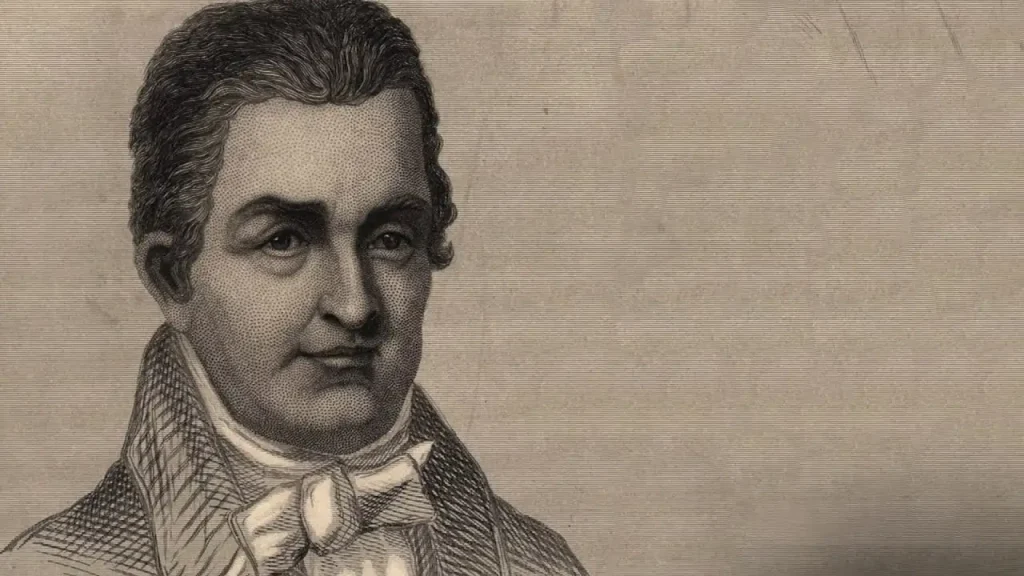
One of the most important names in refrigeration history is Oliver Evans, an American inventor and engineer. In 1805, Evans described a closed-cycle vapor compression refrigeration concept in The Young Steam Engineer’s Guide. He did not build the familiar kitchen refrigerator we recognize today, but his idea anticipated the fundamental operating principle behind many later refrigeration machines.
A vapor compression system circulates refrigerant through several stages. In simplified terms, the refrigerant evaporates at low pressure while absorbing heat, is compressed, releases heat as it condenses at higher pressure, and then passes through an expansion stage so the process can begin again. Repeating this vapor compression cycle continuously transfers heat away from the refrigerated space.
The concept was revolutionary because it pointed toward continuous mechanical cooling rather than dependence on naturally harvested ice. But an idea on paper was only one step. Engineers still needed machines capable of putting the theory into practice reliably.
Jacob Perkins Built an Early Mechanical Refrigeration Machine
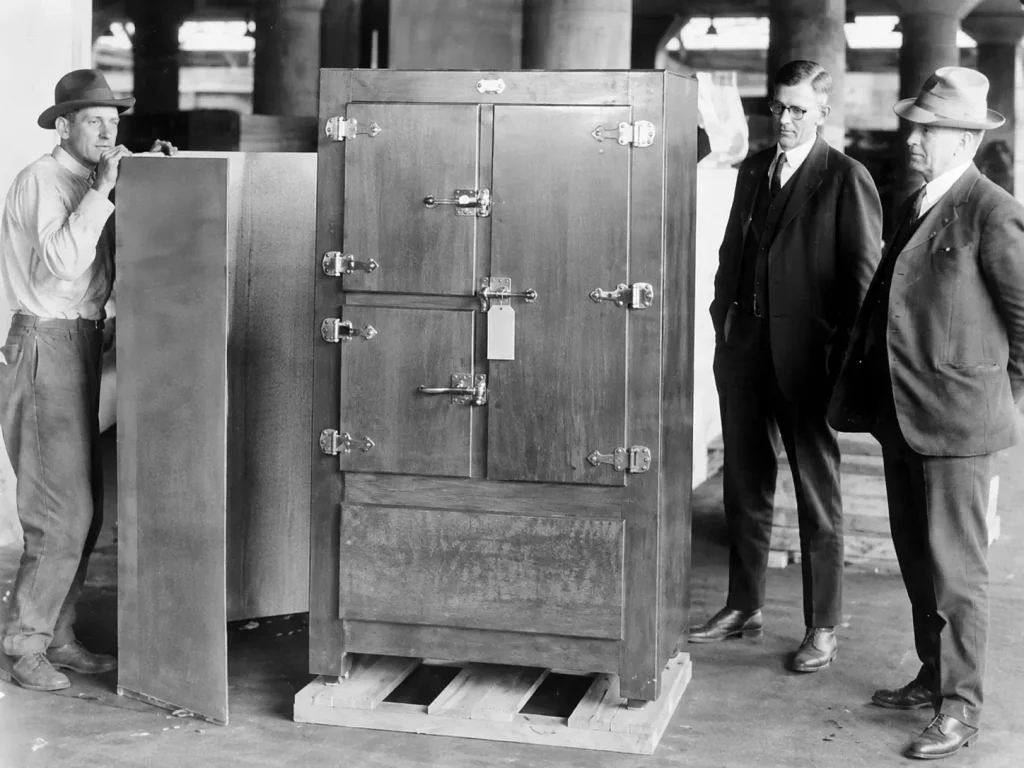
In 1834, American inventor Jacob Perkins received a patent for a mechanical refrigeration machine. ASHRAE’s historical chronology recognizes this as a major milestone in the development of practical refrigeration. Perkins’ work demonstrated how the vapor-compression principle could move beyond theory toward actual machinery.
These early systems were nothing like a quiet home refrigerator. Refrigeration equipment was large, mechanically complicated, and far removed from something an ordinary family could purchase and install between the kitchen cabinets. Nevertheless, the technology demonstrated that humans could manufacture cold mechanically instead of waiting for winter.
That distinction matters when asking who invented the refrigerator. Evans contributed an important theoretical design, while Perkins helped turn vapor compression into working machinery. The refrigerator’s development was cumulative rather than the achievement of one isolated inventor.
John Gorrie and the Ice-Making Machine
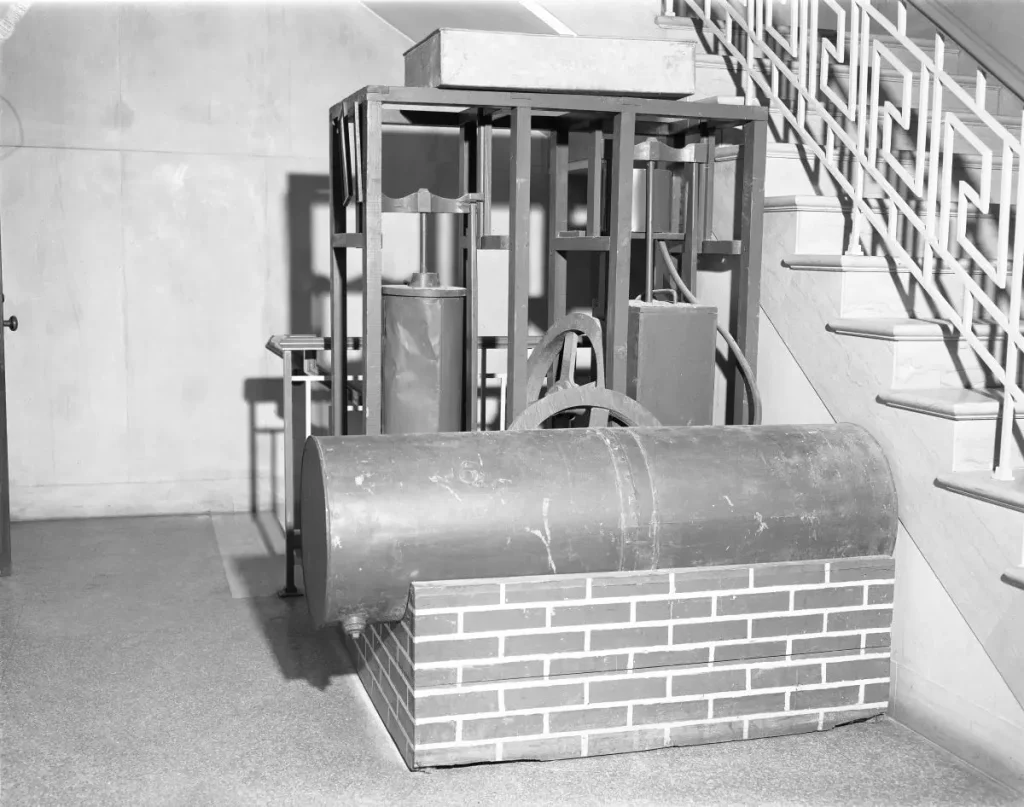
Another major figure was physician John Gorrie, who worked in Florida during the 19th century. Gorrie believed cooling could help improve conditions for patients suffering from illnesses associated at the time with hot, humid environments. He proposed mechanical cooling in the 1840s and developed an air-cycle machine capable of making ice, receiving a U.S. patent in 1851.
His work is particularly interesting because it connects refrigeration with another appliance we now take for granted: the air conditioner. ASHRAE describes Gorrie as an important early figure in mechanical comfort cooling, while emphasizing that no single person can accurately be credited with inventing modern air conditioning.



Gorrie’s machine did not create the household refrigerator industry. It did, however, demonstrate how mechanical refrigeration could produce ice and lower environmental temperatures without relying on natural winter ice.
Carl von Linde Made Refrigeration Commercially Practical
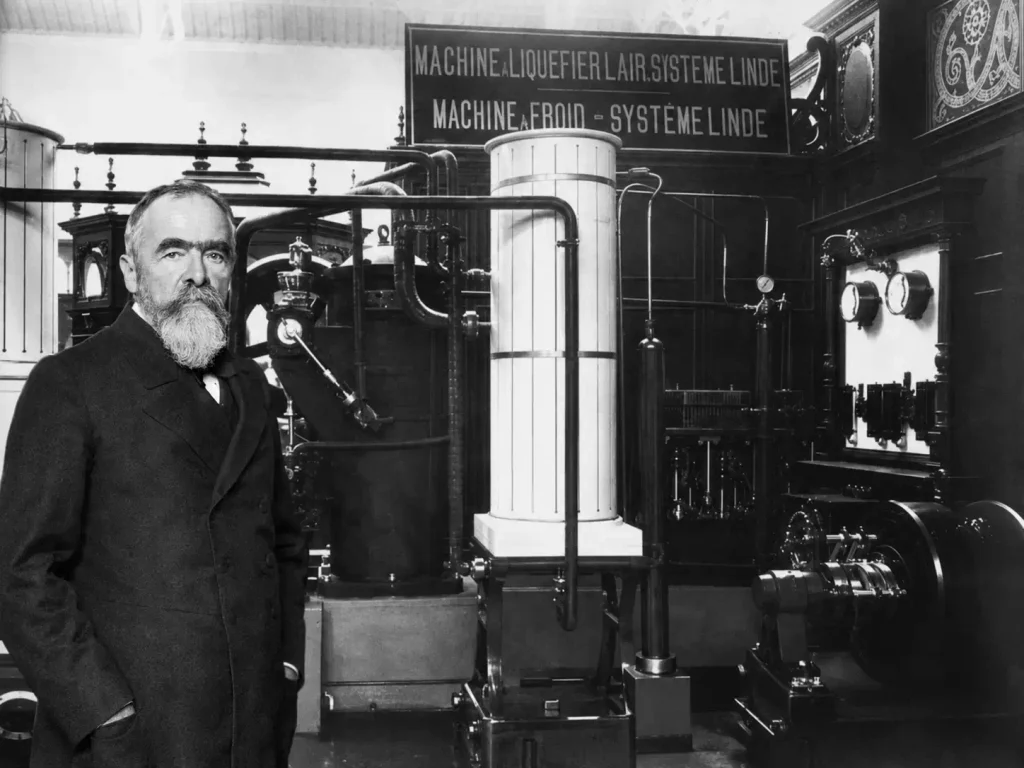
By the second half of the 19th century, refrigeration was moving from experimental machinery toward industry. German engineer Carl von Linde became one of the most influential figures in this transition. In 1870, Linde published a thermodynamic analysis of refrigeration, and his later commercial machines were developed partly to meet the brewing industry’s need for dependable year-round cooling.
Breweries were an ideal early customer because fermentation and storage depended heavily on reliable temperature controlled environments. Natural ice could be inconsistent and seasonal, whereas industrial refrigeration offered predictable cooling regardless of outdoor conditions. Refrigeration soon became increasingly valuable for food production, cold storage, meatpacking, shipping, and other industries.
Linde’s work helped demonstrate the economic potential of commercial refrigeration. Large refrigeration units could preserve products, support transportation, and make food production less dependent on climate and season. By the late 19th century, refrigeration had become an important industrial technology even though most families still did not own mechanical refrigerators.
When Did the Electric Refrigerator Appear in Homes?
The transition from industrial equipment to household refrigerators occurred gradually during the early 20th century. One important American development appeared in 1913, when Fred W. Wolf introduced the DOMELRE—short for Domestic Electric Refrigerator—which used an electrically powered refrigeration unit associated with an icebox-style cabinet. Other inventors and manufacturers quickly pursued competing designs.
Nathaniel Wales developed ideas that contributed to Kelvinator, while Alfred Mellowes worked on a self-contained electric refrigerator design. By 1918, Kelvinator was selling refrigerators with automatic control, and the industry was beginning to shift from modified iceboxes toward purpose-built electric appliances.
These early refrigerators remained expensive. Like many emerging home appliances, they were initially luxurious items rather than ordinary necessities. The challenge was no longer simply making a refrigerator work—it was making one reliable, compact, safe, affordable, and convenient enough for millions of households.
The Absorption Refrigerator Offered Another Approach
Vapor compression wasn’t the only technology being explored. Swedish engineering students Baltzar von Platen and Carl Munters developed an absorption refrigerator during the early 1920s, seeking a system capable of operating without the conventional moving compressor found in vapor-compression equipment. Their U.S. patent application dates from 1922.
The system associated with von platens and Munters could use a heat source to drive the refrigeration process. That heat might come from electricity, gas, propane, or another suitable source depending on the design. Absorption technology eventually found applications where quiet operation or access to non-electric energy sources was useful.
Absorption refrigerators never displaced vapor-compression refrigerators as the dominant household technology, but they remain an important branch of refrigeration engineering. Modern absorption units can still be found in certain recreational vehicles, hotels, and specialized applications.
Why 1927 Was a Turning Point
One of the most important dates in the history of refrigerator adoption is 1927. General Electric introduced its famous Monitor Top refrigerator that year, named because the cylindrical compressor assembly mounted on top resembled the turret of the Civil War ironclad USS Monitor. It became the first electric refrigerator to achieve widespread popularity in American homes.
The Monitor Top was not the first refrigerator and wasn’t even the first electric household refrigerator. Its significance was commercial: it helped transform mechanical refrigeration into a realistic household product. Research into the early U.S. refrigerator industry shows that manufacturers invested heavily in factories and mass production, allowing costs to fall as the market expanded.
During the late 1920s and particularly the 1930s, refrigerators became increasingly accessible. The Smithsonian notes that Americans began abandoning unreliable iceboxes for more affordable electric refrigerators during the 1930s, with adoption accelerating further from 1935 as New Deal loans encouraged household electrification and appliance purchases.

How Refrigerators Changed Food Preservation
The arrival of reliable refrigeration dramatically changed food preservation. Instead of purchasing only what could be eaten quickly or relying heavily on salting, drying, canning, smoking, fermentation, and natural ice, families gained a more predictable way to keep perishable food at safe low temperatures.
Refrigerators also changed shopping habits. Milk, meat, fish, cooked leftovers, and many other foods could remain usable for longer under appropriate refrigeration, reducing the need for extremely frequent shopping. Consistent temperatures also made it easier to store a broader variety of foods at home.
The impact extended far beyond kitchens. Refrigerated warehouses, trucks, railcars, ships, supermarkets, restaurants, and food-processing plants created cold chains capable of moving perishable products across enormous distances. The same underlying technological principles therefore reshaped agriculture, trade, public health, retailing, and everyday diets.
From a Cold Cabinet to the Modern Refrigerator
Early domestic machines would look surprisingly basic beside a modern refrigerator. Refrigeration technology improved rapidly throughout the 20th century as compressors became smaller and more reliable, insulation improved, temperature controls became more accurate, and manufacturing became less expensive.
Features that now seem ordinary arrived gradually. Ice cube trays, interior lights, adjustable shelves, automatic defrosting, improved door seals, and dedicated freezer compartments transformed refrigerators into increasingly convenient kitchen appliances. Later models introduced a separate freezer, automatic ice makers, through-door water dispensers, digital temperature controls, and eventually internet-connected features.
By the middle and later 20th centuries, refrigerators had shifted from aspirational purchases to standard household infrastructure across many higher-income countries. The Smithsonian notes that by the 1960s, Americans were purchasing increasingly large refrigerators with spacious freezers, reflecting how much food storage habits had changed in only a few decades.
How Does a Modern Refrigerator Actually Work?
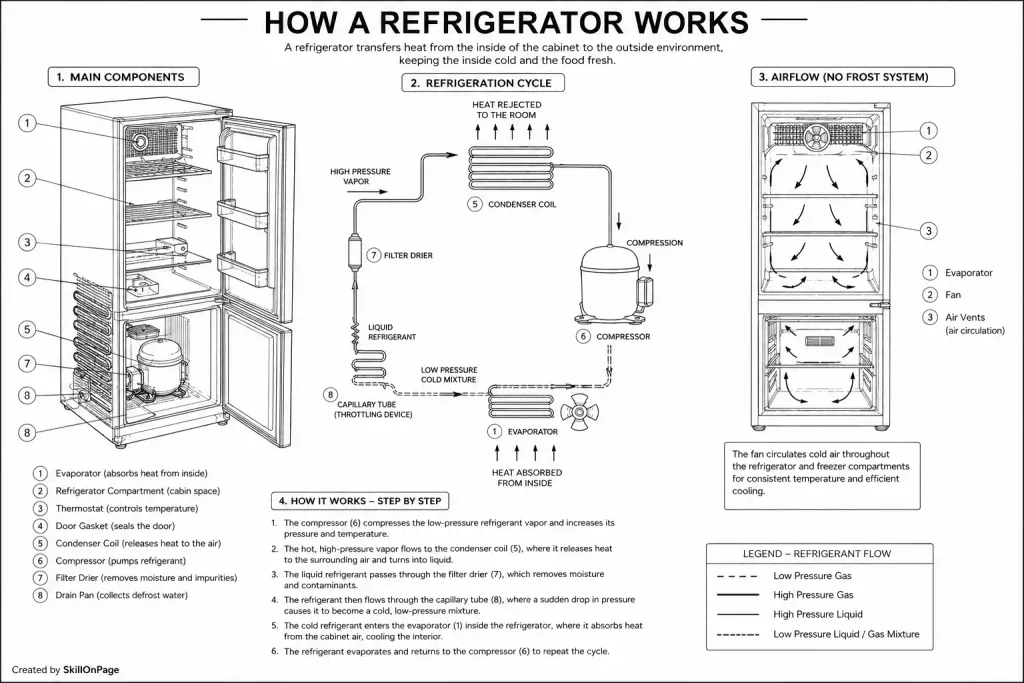
Most modern household refrigerators still depend on the basic logic of the vapor compression cycle. A compressor raises the pressure of refrigerant vapor, the refrigerant releases heat through the condenser, an expansion device reduces its pressure, and the refrigerant evaporates in the evaporator while absorbing heat from inside the refrigerator.
This circulation does not simply manufacture “cold.” It transfers heat from the food-storage compartment to the surrounding room. The cooling effect occurs because the refrigerant absorbs heat as it changes state under controlled pressure and temperature conditions.
The principle also explains why refrigeration and air-conditioning technology are closely related. A refrigerator removes heat from a small insulated cabinet, while an air conditioner transfers heat from an indoor environment to the outdoors. Different applications require different designs, but the underlying thermodynamic concepts can be closely connected.
Refrigerants Created a New Environmental Problem
Refrigeration required substances capable of circulating through cooling systems and changing phase under useful conditions. Early refrigeration designers experimented with various chemical compounds, including ammonia, sulfur dioxide, carbon dioxide, methyl chloride, and others. Many early refrigerants worked effectively but could be toxic, flammable, reactive, or otherwise hazardous if systems leaked.
In the late 1920s, researchers developed chlorofluorocarbon refrigerants, and commercial CFC production began in the early 1930s. These compounds initially appeared extremely attractive because they were relatively stable, nonflammable, and low in acute toxicity compared with several earlier alternatives. CFC-based mechanical compression subsequently became enormously important in refrigeration.
The environmental consequences became clear decades later. CFCs are extremely stable in the lower atmosphere, allowing them eventually to reach the stratosphere, where chlorine released from the molecules damages the ozone layer. International action through the Montreal Protocol led to the phaseout of major ozone-depleting refrigerants, and refrigeration engineering has continued evolving toward alternatives with lower environmental impact.
Modern refrigeration therefore has another engineering challenge beyond simply keeping food cold. Refrigerants must be evaluated for thermodynamic performance, toxicity, flammability, ozone-depletion potential, and climate impact, making the development of safer and lower-impact systems an ongoing technological story.
Refrigeration Is Still Evolving
The refrigerator may look like a mature technology, but technological developments have not stopped. Manufacturers continue working on compressor efficiency, insulation, refrigerants, temperature management, noise reduction, food-storage zones, sensors, and energy consumption.
Commercial and industrial systems are evolving as well. Modern supermarkets may use centralized, distributed, secondary-loop, cascade, or carbon-dioxide-based systems depending on their design and regulatory environment. The EPA notes that refrigeration technology has continued changing in response to both energy requirements and concerns about refrigerant emissions.
The future refrigerator may therefore change less dramatically in appearance than refrigerators did between 1910 and 1950, but what happens behind the walls of the cabinet is still evolving. Efficiency and environmental performance have become as important to engineers as the original challenge of reliably keeping food cold.
Frequently Asked Questions
When was the refrigerator invented?
There is no single invention date. Oliver Evans proposed a closed-cycle vapor-compression refrigerator in 1805, Jacob Perkins patented a mechanical refrigeration machine in 1834, and John Gorrie developed an ice-making refrigeration machine during the 1840s. Practical electric household refrigerators appeared during the early 20th century, with the GE Monitor Top becoming widely popular after its 1927 introduction.
The correct date therefore depends on what you mean by “refrigerator.” The history includes theoretical refrigeration systems, working mechanical machines, industrial refrigerators, household electric refrigerators, and finally mass-market appliances.
Who invented the first refrigerator?
No single person invented everything we now call a refrigerator. Oliver Evans developed an important early vapor-compression concept, Jacob Perkins built and patented an early mechanical system, John Gorrie advanced ice-making refrigeration, and Carl von Linde improved commercial refrigeration engineering.
Later inventors transformed those principles into household appliances. The modern refrigerator is best understood as the cumulative product of many engineers and scientists rather than one invention appearing fully formed.
Was Oliver Evans the inventor of the refrigerator?
Oliver Evans is frequently credited with designing an early vapor-compression refrigeration concept. His 1805 proposal described a closed-cycle system, but he did not produce the modern household refrigerator.
Jacob Perkins subsequently patented a working mechanical refrigeration machine in 1834. Calling Evans “the inventor” therefore captures an important contribution but oversimplifies the history.
When did refrigerators become common in homes?
Electric household refrigerators began appearing during the 1910s, but initially they were expensive and uncommon. The GE Monitor Top introduced in 1927 became widely popular, and adoption accelerated through the 1930s as appliances became more affordable and household electrification expanded.
This transition did not happen simultaneously worldwide. Access depended on electricity, income, manufacturing capacity, infrastructure, and local economic conditions.
What did people use before refrigerators?
People used cellars, wells, springs, ice houses, natural snow and ice, and eventually insulated household iceboxes. Food was also preserved through techniques such as drying, salting, smoking, fermenting, and canning.
These approaches could extend food life but lacked the continuous temperature control offered by mechanical refrigeration. The refrigerator eventually made reliable low-temperature storage an everyday household convenience.
When was the first electric refrigerator invented?
Early electric household refrigeration appeared during the 1910s. Fred W. Wolf’s DOMELRE, introduced in 1913, is commonly identified as an early electric domestic refrigerator, although it was essentially a refrigeration mechanism associated with an icebox rather than the fully integrated appliance familiar today.
Self-contained designs followed, and manufacturers including Kelvinator, Frigidaire, and General Electric helped commercialize the technology. By the late 1920s, the household refrigerator industry was developing rapidly.
Who invented the absorption refrigerator?
Carl Munters and Baltzar von Platen developed an influential gas absorption refrigerator while studying engineering in Sweden during the early 1920s. Their design aimed to provide refrigeration without the conventional compressor and could be driven by a heat source.
The technology was later commercialized and remains useful in specialized applications. It represents an important alternative path in the development of refrigeration.
From Snow Pits to Smart Refrigerators
So, when refrigerator invented does not have the simple one-date answer the question appears to demand. The technology emerged gradually: people first exploited natural snow and ice, scientists learned how evaporation and pressure could remove heat, engineers developed mechanical systems, and manufacturers eventually transformed those machines into affordable household appliances.
Oliver Evans’ 1805 vapor-compression proposal and Jacob Perkins’ 1834 mechanical refrigeration patent were major early milestones. John Gorrie’s ice-making work pushed refrigeration toward practical cooling, Carl von Linde helped make it commercially valuable, and early-20th-century manufacturers finally brought automatic refrigeration into the home.
By the 1930s, electric refrigeration was beginning to transform everyday life in the United States, replacing iceboxes and changing how families bought, stored, and prepared food. What started as an effort to create and preserve cold eventually became one of the most important home appliances ever developed.
The refrigerator’s history is therefore not simply the story of one clever machine. It is the story of centuries of scientific discovery, industrial engineering, mass production, changing food systems, and continual improvements that turned controlled cold from a luxury into something billions of people now encounter every day.