







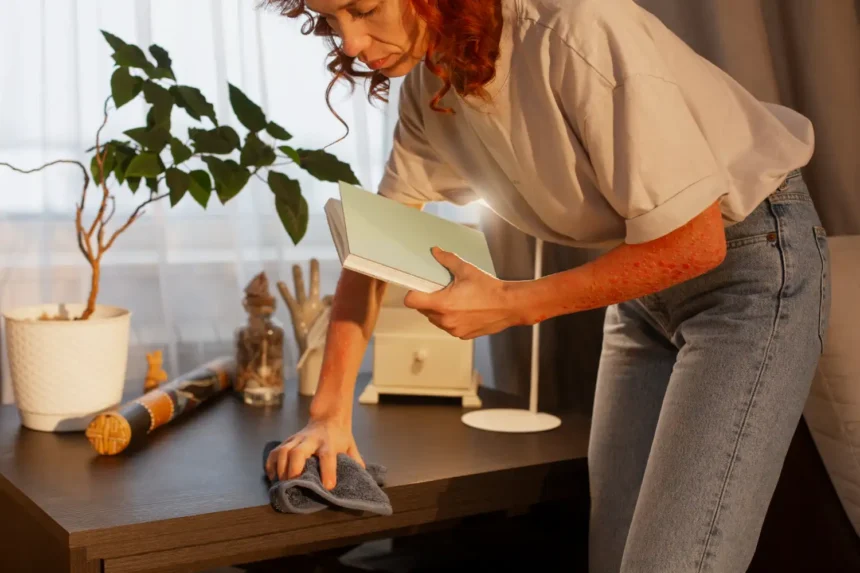
Keeping your home consistently tidy shouldn’t mean spending every Saturday scrubbing for hours. A good cleaning routine spreads household chores throughout the week so mess doesn’t have enough time to become overwhelming. Instead of waiting until you desperately need to clean the house, you handle a few manageable jobs each day.
- Start With a Simple Daily Cleaning Routine
- Build Your Weekly Cleaning Routine
- Decide What Actually Needs Cleaning
- Add Monthly Cleaning Tasks
- Keep Your Cleaning Products Simple
- Use a Cleaning Checklist Without Becoming Controlled by It
- Don’t Save Everything for One Day
- Frequently Asked Questions
- A Routine Should Make Your Home Easier to Live In
The secret is creating a cleaning schedule around your actual home and life, not somebody else’s picture-perfect routine. If you have children, work long hours, travel regularly, or do several loads of laundry every week, your schedule will naturally look different from someone living alone. The best routine is the one you can continue even when life gets busy.
Start With a Simple Daily Cleaning Routine
Before creating complicated planning pages or a huge cleaning checklist, establish a few daily routines. Your daily cleaning routine should concentrate on jobs that make the biggest visual and practical difference. You want to prevent clutter and dirt from accumulating, not conduct a miniature spring cleaning every morning.
Useful daily cleaning tasks include making beds, putting dirty clothes in the hamper, wiping kitchen counters, washing dishes or loading the dishwasher, and spending a few minutes returning misplaced items to their proper rooms. These small daily tasks often take less time than expected. Ten or fifteen minutes of daily cleaning can make tomorrow’s work significantly easier to clean.



Try attaching these jobs to habits you already have. You could unload the dishwasher while waiting for your morning cup of coffee, wipe the kitchen after dinner, and tidy the living room before going to bed. Connecting housework with existing habits makes it less dependent on remembering or suddenly feeling motivated.
Build Your Weekly Cleaning Routine
Once your everyday basics are working, create a weekly cleaning routine for jobs that don’t need attention every day. Rather than attempting everything at once, assign a different cleaning task to several days of the week. This keeps your weekly cleaning manageable and gives each area regular attention.
A simple schedule might look like this:
- Monday: Dust furniture and surfaces.
- Tuesday: Vacuum carpets and rugs.
- Wednesday: Clean the bathrooms.
- Thursday: Laundry and towels — you might even label it thursdays wash on your calendar.
- Friday: Kitchen appliances and refrigerator check.
- Saturday: Change bedding — saturdays sheets can become an easy reminder.
- Sunday: Light reset and checking the floors.
You don’t have to follow those exact days. Your personal weekly cleaning task should fit around work, childcare, exercise, social plans, and periods when school starts or schedules become busier. Moving bathroom cleaning from Wednesday to Saturday doesn’t make the system unsuccessful.
If one room needs extra attention, make it that week’s priority. A flexible schedule creates a clean home without turning housekeeping into another rigid obligation.
Decide What Actually Needs Cleaning
One reason people abandon cleaning schedules is that they create far too many rules. You probably don’t need to wash the floors throughout your entire home every day, and some rooms need considerably more attention than others. Kitchens, entrances, and bathrooms generally accumulate mess faster than spare bedrooms.



Learn to check floors rather than automatically cleaning them according to an arbitrary schedule. The same principle applies to dusting, mirrors, furniture, and other household surfaces. A clean house is the goal; completing unnecessary chores just because your calendar says so isn’t.
This is where simple cleaning becomes useful. Prioritize visible mess, hygiene, high-use areas, and anything that will become harder to handle if neglected. These simple ideas make the routine sustainable rather than exhausting.
Add Monthly Cleaning Tasks
Some chores need attention occasionally but don’t belong among your weekly tasks. Create a separate list of monthly cleaning tasks so they don’t clutter your everyday schedule. Depending on your home, this might include cleaning the washing machine, wiping doors and baseboards, vacuuming underneath furniture, cleaning light fixtures, or checking the refrigerator thoroughly.
You can also choose a monthly focus instead of attempting every occasional chore simultaneously. January might focus on kitchen cupboards, February on closets, and March on windows. Breaking larger jobs into a months cleaning theme prevents them from accumulating until an enormous annual clean becomes necessary.
Reserve genuine deep cleaning tasks for these sessions. Oven cleaning, washing behind large appliances, shampooing carpets, decluttering storage areas, and thoroughly cleaning overlooked spaces are better suited to periodic deep cleaning. You can still have a clean and organized home without deep-cleaning every room every week.
Keep Your Cleaning Products Simple
You don’t necessarily need a cupboard filled with specialized products. A small collection suitable for your home’s particular surfaces can make cleaning faster because you’re not constantly deciding which bottle to use. Always follow manufacturer instructions, ventilate appropriately, and never mix cleaning chemicals unless the labels specifically indicate that doing so is safe.
Some people prefer minimalist product systems such as Branch Basics, while others use ordinary supermarket cleaners or homemade solutions appropriate for specific surfaces. The brand matters less than whether the product is suitable for what you’re cleaning and used according to its instructions. Keep frequently used supplies somewhere accessible so there’s less friction between noticing dirt and dealing with it.
Online cleaning websites may ask for user consent for cookies or data collection and describe those systems as necessary for basic functionalities of the site. Those website notices have nothing to do with whether a particular cleaning method is effective. When looking for cleaning tips, focus on practical advice and product safety rather than marketing language.



Use a Cleaning Checklist Without Becoming Controlled by It
A checklist should remove mental effort, not create guilt. Write down your daily, weekly, and monthly chores, but treat them as reminders rather than commandments. If you miss Tuesday’s vacuuming because you worked late, simply move it rather than trying to “catch up” at midnight.
You can organize your cleaning checklist into three categories: daily maintenance, weekly cleaning, and occasional deeper jobs. Printable calendars and planning pages can help if you enjoy seeing progress visually. Others may prefer reminders on their phone or a handwritten list attached to the refrigerator.
The important thing is knowing what needs attention without repeatedly making the decision from scratch. Once the system becomes familiar, you’ll spend less time to clean because you’re preventing large messes instead of repeatedly rescuing rooms from them.
Don’t Save Everything for One Day
A common mistake is adopting an exhausting day cleaning approach in which the entire house is neglected during the week and attacked on Saturday. That can work for some households, but many people find that losing half a weekend to chores makes cleaning feel like punishment. Twenty minutes on several days may feel much easier than four continuous hours.
The same principle applies when you want the house cleaned before guests arrive. If everyday maintenance has kept surfaces clear, dishes handled, laundry controlled, and bathrooms reasonably fresh, preparing for visitors becomes much easier. You can concentrate on vacuuming, bathrooms, and finishing touches instead of starting from chaos.
A consistently clean and tidy home doesn’t have to be immaculate. Real homes contain shoes, dishes, paperwork, toys, laundry, and people actually living in them. Your routine should support your life rather than make your home feel like a showroom you are constantly protecting.
Frequently Asked Questions
What is the best cleaning routine for beginners?
Start with five basic daily jobs: make the bed, deal with dishes, wipe kitchen surfaces, put belongings away, and do a quick floor or clutter check. Then assign one larger task to several days of the week, such as bathrooms, vacuuming, dusting, or laundry. Once those habits feel automatic, gradually introduce monthly jobs.
Avoid creating a 40-item schedule on your first day. Starting too aggressively makes the routine difficult to maintain and can create the impression that your home is never finished. A small routine completed consistently is more useful than an ambitious routine repeatedly abandoned.
How much cleaning should I do every day?
For many households, 10–30 minutes of maintenance can make a substantial difference, although larger families and homes may require more. Concentrate on kitchens, dishes, clutter, laundry, and high-traffic areas rather than trying to clean every room every day. The objective is to keep your home clean enough that weekly work remains manageable.
Some days will naturally require more work and others almost none. Cleaning after cooking for six people is different from cleaning after ordering dinner for one, so don’t measure success purely in minutes. Adjust the workload to what actually happened in your home that day.
Is it better to clean one room a day?
It can be, particularly if room-based cleaning feels intuitive to you. You could dedicate Monday to bathrooms, Tuesday to bedrooms, Wednesday to the kitchen, and so on. This provides clear stopping points and prevents the entire house from becoming one enormous project.
However, task-based cleaning can sometimes be quicker because you keep the same equipment in your hands. Vacuuming several rooms at once, for example, may be more efficient than repeatedly setting up the vacuum on different days. Experiment with both approaches and keep whichever feels easier.
What should be cleaned weekly?
Typical weekly jobs include bathroom cleaning, vacuuming, mopping frequently used floors, dusting, changing bed linen, cleaning mirrors, and giving the kitchen more detailed attention. Homes with children, pets, allergies, or heavy foot traffic may need some of these jobs more frequently. Rooms that are rarely used may need them less often.
Don’t automatically copy somebody else’s schedule. If your floors still look perfectly clean after seven days, they may not require the same frequency as the kitchen floor in a household with three children and two dogs. Let actual conditions guide the schedule.
How do I stay motivated to clean?
Make starting ridiculously easy. Set a timer for ten minutes, put on music or a podcast, and choose one clearly defined job instead of telling yourself to “clean everything.” Once the timer ends, you can stop without feeling that you failed.
Motivation also becomes less important when cleaning turns into a habit. If wiping the kitchen happens automatically after dinner, you no longer need to persuade yourself each evening. That is ultimately what makes a good cleaning routine work.
A Routine Should Make Your Home Easier to Live In
You don’t need a complicated system to keep your home comfortable. Begin with a handful of daily tasks, distribute larger jobs throughout the week, and reserve occasional projects for monthly or seasonal cleaning. Once those habits settle into place, maintaining order requires considerably less effort.
More importantly, allow your schedule to change. Holidays, children, illness, busy work periods, visitors, and ordinary exhaustion will occasionally interrupt even the best routine, and missing a cleaning day doesn’t mean you need to start over. Simply pick up with the next useful task.
The purpose isn’t to have your home clean every minute of every day. It is to create a realistic system that keeps clutter and dirt from becoming overwhelming while leaving plenty of time to actually enjoy living there.