







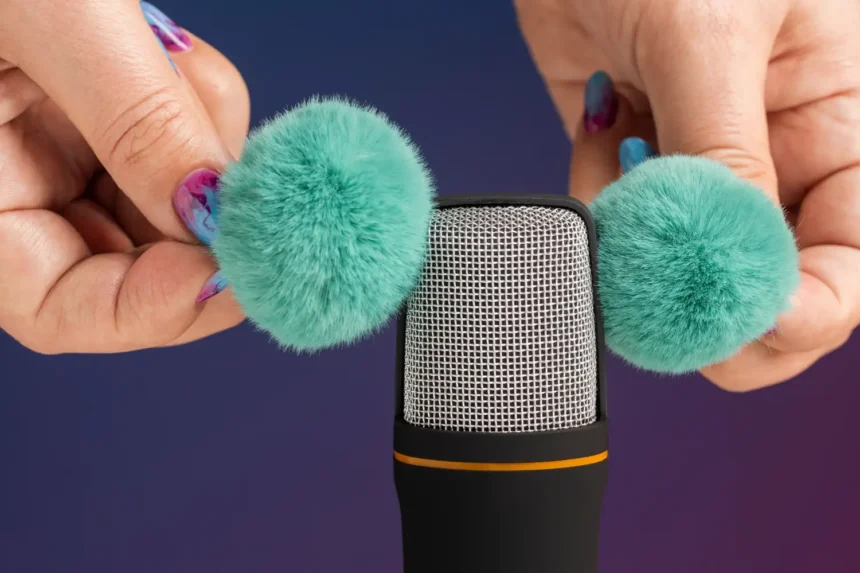
If you have ever opened YouTube and discovered a video of someone whispering into a microphone, tapping slowly on a glass jar, folding towels, brushing hair, or pretending to give you an eye examination, you have probably entered the world of ASMR. To someone unfamiliar with it, the videos can look rather strange. To millions of people, however, they can be remarkably relaxing.
- What Does ASMR Actually Feel Like?
- What Triggers ASMR?
- Why Are People Watching YouTube Videos of Whispering and Tapping?
- Why Does ASMR Happen?
- Why Doesn’t Everyone Experience ASMR?
- Is ASMR the Same as Binaural Beats?
- Can ASMR Improve Mental Health?
- ASMR and Sleep: Does It Really Work?
- Is Watching ASMR Safe?
- How to Try ASMR for the First Time
- Frequently Asked Questions
- Why ASMR Became More Than an Internet Trend
ASMR stands for autonomous sensory meridian response. It describes pleasant tingling sensations that commonly begin around the scalp or back of the neck and can sometimes travel down the spine or into other parts of the body. The feeling is usually accompanied by calmness and relaxation, although ASMR is an individual experience and not everybody feels it.
The enormous popularity of youtube videos designed to produce this response has turned a once-obscure sensation into a global internet phenomenon. Scientists have now begun investigating why people watch ASMR, what happens physiologically while they experience it, and whether its apparent benefits for relaxation, mood, and sleep extend beyond anecdotal reports.
What Does ASMR Actually Feel Like?
People who experience ASMR often describe a pleasant, static-like tingling beginning at the top or back of the head. It may remain localized or spread through the neck, shoulders, back, and occasionally other areas. The sensation isn’t usually painful or uncomfortable; it is commonly associated with relaxation and well-being.



But ASMR isn’t simply “tingles.” Some people feel extremely relaxed without experiencing a strong physical sensation, while others describe waves of tingling that occur whenever the right sound or movement appears. Researchers therefore distinguish between the external stimulus and the person’s subjective ASMR experiences.
One study found that watching ASMR videos increased pleasant feelings among participants who experienced ASMR. In a laboratory experiment, those participants also showed a reduced heart rate while watching the videos, alongside increased skin conductance—a particularly interesting combination because it suggests ASMR may involve relaxation and physiological arousal simultaneously.
This helps explain why simply asking whether ASMR is “relaxing” may not capture the entire phenomenon. Peoples experiences can combine physical tingles, focused attention, emotional comfort, calmness, and sensory stimulation.
What Triggers ASMR?
An ASMR trigger is a sound, sight, movement, or situation that produces the characteristic response. What works can differ dramatically between individuals. Someone may react immediately to whispering but feel absolutely nothing when listening to tapping, while another person has exactly the opposite reaction.
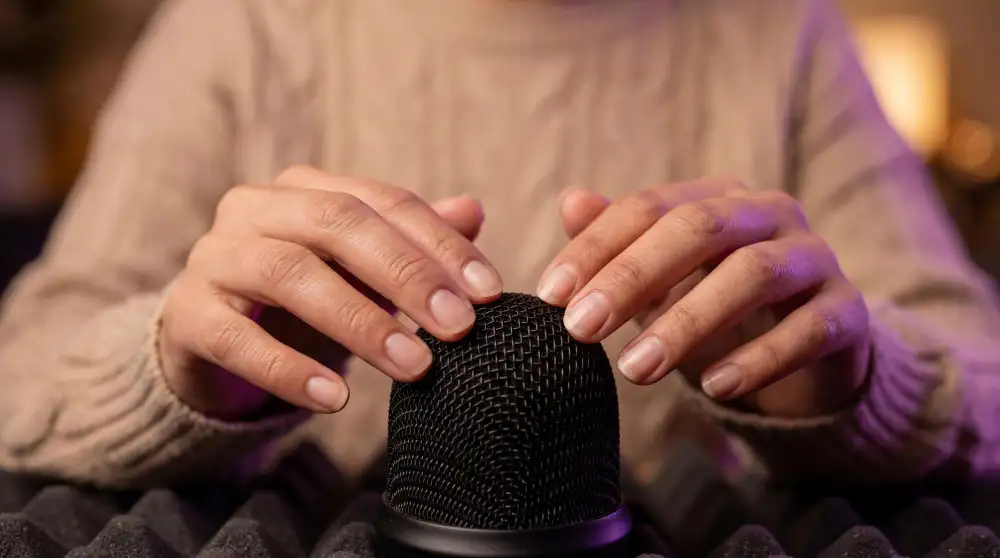
Common triggers include whispering, gentle tapping, scratching sounds, slow hand movements, hair brushing, careful repetitive tasks, page turning, and soft-spoken voices. Visual stimuli can also be important, particularly deliberate hand movements or watching somebody carefully complete a precise task. Research has repeatedly identified whispering, slow movements, crisp sounds, and personal attention among common triggers.
Personal-attention videos form an especially large category of ASMR content. A creator might role-play as a hairdresser, doctor, makeup artist, librarian, optician, or spa employee. Nothing is actually happening to the viewer, but the combination of close attention, slow movements, soft speech, and predictable actions can trigger ASMR in susceptible viewers.



For others, the perfect trigger might simply be a quiet video of someone whispering while turning the pages of a book.
Why Are People Watching YouTube Videos of Whispering and Tapping?
The simplest answer is relaxation. In an influential 2015 study of 475 ASMR participants, 98% reported using ASMR for relaxation, 82% reported using it to help them sleep, and 70% reported using it to deal with stress. The study also reported temporary improved mood among participants, although these self-reported findings shouldn’t be interpreted as proof that ASMR treats a medical or psychiatric condition.
The rise of social media provided an ideal environment for the phenomenon. Video makers could deliberately reproduce the sounds and scenarios viewers described as effective, while comments allowed communities to compare triggers and discover that other people had been experiencing similar sensations for years.
Today, people are watching youtube creators perform everything from simulated medical examinations to elaborate sound experiments. Some viewers watch ASMR every evening, while others use it only occasionally when stressed.
The format is particularly suited to headphones and quiet nighttime viewing. High-quality microphones can capture extremely subtle sounds that ordinary videos would ignore, making watching these videos feel surprisingly intimate and immersive.
Why Does ASMR Happen?
This is where ASMR explained becomes considerably more complicated. Researchers can study what participants report and measure physiological or neurological changes, but there is not yet one definitive scientific explanation for why some people experience ASMR and others don’t.
A 2023 scientific review concluded that ASMR research had expanded considerably during the previous decade, but important questions remained unresolved, including the roles of expectancy and placebo effects. Researchers have explored similarities and differences between ASMR and phenomena such as musical chills, synesthesia, and misophonia, but ASMR appears to be a distinct sensory-emotional experience.
In other words, articles promising asmr explained why millions of viewers experience tingles should be cautious about presenting a single neurological mechanism as established fact. Science can increasingly demonstrate that the experience is measurable, but exactly why it occurs remains under investigation.



One possibility is that gentle attention and predictable sensory cues create a combination of safety, focus, and relaxation. However, more research is needed before scientists can confidently explain the complete mechanism behind autonomous sensory meridian response asmr.
Why Doesn’t Everyone Experience ASMR?
ASMR appears to vary substantially between individuals. People who experience it may respond intensely to several triggers, mildly to only one or two, or find that their triggers change over time. Other people can watch identical content and experience no tingles whatsoever.
That doesn’t necessarily mean the videos cannot be relaxing. Someone who doesn’t experience the characteristic tingling may still enjoy a quiet voice or repetitive sounds before bed.
Research examining people who experience asmr has explored differences in personality, sensory sensitivity, emotional responses, and brain activity, but there is currently no simple test that can reliably predict who will experience it.
If you’re curious, try several different styles rather than deciding after one video. Whispering, tapping, role-play, slow hand movements, and repetitive visual tasks can produce very different responses. Your first successful trigger may not resemble what you expected.
Is ASMR the Same as Binaural Beats?
No. Binaural beats and ASMR are different phenomena, although both frequently appear in relaxation and sleep content.
Binaural beats are an auditory illusion created when slightly different frequencies are presented separately to each ear, typically through headphones. The listener perceives an additional rhythmic beat corresponding to the frequency difference. ASMR, by contrast, involves a sensory-emotional response to particular triggers such as whispers, tapping, careful movements, or simulated personal attention.
A video can theoretically incorporate ASMR triggers and binaural audio techniques simultaneously, which may explain some confusion. But hearing binaural beats does not mean someone is experiencing ASMR, and ASMR doesn’t require binaural beats.
Can ASMR Improve Mental Health?
Many viewers use ASMR when stressed, anxious, lonely, or emotionally overwhelmed. Experimental evidence has found increased pleasant affect and relaxation among ASMR responders, while earlier research reported temporary improvements in mood.
That makes ASMR potentially interesting from a mental health perspective, but there is an important line between relaxation and treatment. ASMR should not be presented as a proven treatment for depression, anxiety disorders, bipolar disorder, or other psychiatric conditions.
If ASMR helps you unwind, there is generally nothing wrong with using it as part of a broader relaxation routine. But it shouldn’t replace appropriate professional care when significant symptoms are present. Online therapy or in-person mental-health treatment may be appropriate for people experiencing persistent emotional difficulties, depending on individual circumstances and access to care.
The same caution applies to claims involving chronic pain. Early participants have reported temporary reductions in pain symptoms after ASMR sessions, but this evidence is preliminary and does not establish ASMR as a medical treatment for chronic pain.
ASMR and Sleep: Does It Really Work?
Sleep is one of the biggest reasons people seek ASMR. Soft voices, repetitive sounds, low stimulation, and slow predictable movements can create a bedtime atmosphere that some viewers find conducive to relaxation. Many people report that ASMR makes it easier to fall asleep.
However, subjective popularity is different from strong clinical evidence. A scientific review of auditory stimulation as a non-pharmacological sleep aid found that experimental evidence for ASMR and sleep remained limited and that the overall quality of available evidence was poor.
That means ASMR can reasonably be considered among informal sleep aids if it works for you, but it shouldn’t be marketed as established sleep medicine. Persistent insomnia, severe daytime sleepiness, loud snoring with breathing interruptions, or other significant sleep health concerns warrant proper medical assessment.
You should also think about how you use it. If ASMR relaxes you but watching youtube videos keeps your phone inches from your face for another two hours, the overall bedtime habit may not be helping very much. Consider using audio-only content, a sleep timer, low screen brightness, or placing the device away from the bed.
Is Watching ASMR Safe?
For most adults, ordinary ASMR viewing at a comfortable volume is unlikely to present a major health concern. The more practical risks come from listening too loudly, sacrificing sleep because you’re scrolling through videos, or treating ASMR as a substitute for healthcare when symptoms require professional evaluation.
ASMR isn’t a diagnostic tool either. Experiencing it—or not experiencing it—doesn’t tell you whether you have a particular psychological or neurological condition.
When reading articles labeled medically reviewed, look at what evidence actually supports the health claims rather than relying solely on the label. Good health information should clearly separate preliminary research from established evidence and provide additional information about limitations where appropriate.
How to Try ASMR for the First Time
Start somewhere quiet and choose a video featuring one or two common triggers. Whispering or soft-spoken personal-attention videos are reasonable starting points, but tapping, brushing, drawing, page turning, and methodical tasks are also worth trying.
Headphones can make subtle sounds easier to hear, particularly when recordings use left-to-right spatial audio. Keep the volume comfortable; louder isn’t necessarily better. ASMR depends on subtle sensory details, not overwhelming your ears.
Give yourself several minutes without actively trying to force a reaction. If nothing happens, switch to another trigger. ASMR experiences are highly individual, and some people simply don’t experience the characteristic tingles at all.
There is no need to “learn” how to have ASMR. If you enjoy the videos without tingling, that is perfectly valid too.
Frequently Asked Questions
what asmr stand for?
ASMR stands for autonomous sensory meridian response. The term describes a pleasant tingling sensation typically beginning around the scalp or neck and occurring in response to specific auditory, visual, or interpersonal-style triggers.
The name sounds highly scientific, but it wasn’t originally created as a formal medical diagnosis. The term emerged from internet communities around 2010 and was subsequently adopted by researchers studying the phenomenon.
is asmr bad for you?
There is currently no good evidence that ordinary ASMR itself is inherently harmful for healthy adults. Sensible precautions include keeping headphone volume comfortable, avoiding content that makes you uncomfortable, and ensuring nighttime viewing doesn’t interfere with sleep.
It becomes problematic if someone relies on ASMR instead of seeking appropriate treatment for significant medical or psychological symptoms. Relaxation content can complement healthy habits, but it isn’t a replacement for professional care.
is asmr bad for toddlers?
There is not enough ASMR-specific research in toddlers to confidently claim health benefits or establish an ASMR-specific safety profile. Parents should therefore be skeptical of claims that toddlers need ASMR or that it provides scientifically established developmental benefits.
The larger practical issue is how the content is delivered. For young children, consider age-appropriate media guidance, screen exposure, volume levels, autoplay, advertising, and whether the content is actually designed for children. Quiet bedtime interaction with a caregiver is very different from leaving a toddler unattended with hours of algorithm-selected ASMR videos.
does asmr help you sleep?
Possibly, particularly for people who experience ASMR. Surveys show that many ASMR users deliberately watch it to sleep, and relaxation may make falling asleep easier. However, research directly demonstrating meaningful improvements in sleep remains limited, so ASMR shouldn’t yet be considered a proven treatment for insomnia.
If it reliably relaxes you without delaying bedtime, there is little reason not to include it in your routine. If sleep problems persist, however, investigating the underlying cause is more useful than simply adding increasingly long ASMR sessions.
does asmr lower cortisol?
We don’t currently have strong evidence showing that ASMR reliably lowers cortisol. One well-known laboratory study found that ASMR responders experienced a reduction in heart rate, but it measured physiological indicators such as heart rate and skin conductance rather than establishing a cortisol-lowering effect.
Cortisol also has a complicated relationship with stress and sleep, and levels naturally change throughout the day. Even broader sleep research has produced inconsistent findings about cortisol responses, which makes simplistic claims that a relaxing video “reduces cortisol” particularly questionable.
Why do ASMR videos make me tingle?
Researchers don’t yet have a complete answer. Specific combinations of sounds, movements, attention, expectation, and individual sensory processing appear capable of producing the characteristic response in susceptible people. Research confirms that ASMR can involve measurable emotional and physiological changes, but the underlying mechanism remains an active area of study.
Your response can also be highly specific. A trigger that produces intense tingles for you might do absolutely nothing for somebody sitting beside you.
Can you become immune to ASMR?
Some regular viewers report temporarily losing sensitivity to their usual triggers, sometimes informally calling this “ASMR immunity.” However, this isn’t an established medical condition, and research has not yet provided a definitive explanation for it.
If familiar videos stop working, taking a break or trying different triggers may change your individual experience. There is no requirement to continually intensify the sounds or increase headphone volume.
Why ASMR Became More Than an Internet Trend
ASMR began as something people struggled to name. The internet allowed individuals with similar sensations to find one another, and social media gave creators the perfect medium for deliberately recreating the whispers, movements, repetitive sounds, and personal-attention scenarios that viewers found relaxing.
Scientific research has since established something important: ASMR isn’t merely an invented YouTube buzzword. For at least some people, watching these videos is associated with reported tingling, relaxation, improved affect, and measurable physiological changes such as reduced heart rate. At the same time, many larger health claims surrounding ASMR remain ahead of the evidence.
So if ASMR gives you pleasant tingles or helps you settle down before bed, enjoy it for what it is. You don’t need to turn it into a medical treatment for it to be useful. Sometimes a quiet voice, a pair of headphones, and twenty minutes of strangely satisfying tapping are simply a pleasant way to end the day.