







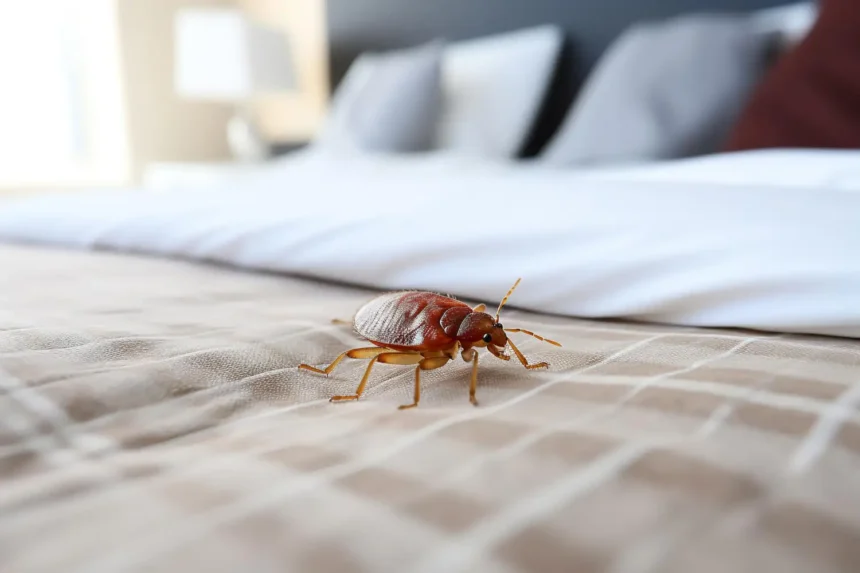
If you have spotted an insect near your bed, you may be wondering: can bed bugs fly? The answer is no. Although adult bed bugs have small wing pads, they do not have functional wings and cannot take flight. The EPA describes them as true bugs with wings that are not used for flying, while public-health guidance also confirms that they cannot jump.
That means when people say they have seen bed bugs fly, they have probably seen another insect or watched a bed bug move quickly across a surface. Understanding how bed bugs move is useful because their real method of spreading is less dramatic but extremely effective.
How Do Bed Bugs Move?
Bed bugs have six legs and travel by crawling and hiding. They move across floors, bed frames, walls, and furniture before disappearing into cracks and crevices, mattress seams, headboards, and box springs close to sleeping areas. They typically emerge to feed on human blood and then return to shelter.
Nor can bed bugs jump like fleas. Instead, bed bugs spread between locations by latching onto or, more accurately, hiding inside luggage, clothing, furniture, bedding, boxes, and other personal belongings that people transport. The EPA describes them as excellent hitchhikers, which explains how bed bug infestations can appear far from their original source.



How to Avoid Bringing Bed Bugs Home
Useful prevention tips include inspecting secondhand furniture before bringing it inside and checking hotel beds around mattress seams and box springs. To avoid bringing bed bugs home after travel, inspect luggage and clothing before spreading them through your bedroom.
For established infestations, sealing cracks and crevices can reduce potential hiding areas but will not eliminate the insects by itself. Effective bed bug control usually requires integrated pest management, and a qualified pest control professional can determine which treatments are appropriate.
Do not assume that a company offering general termite control automatically has extensive bed bug experience. When comparing pest control companies, ask specifically about their approach to identifying and treating bed bugs and whether follow-up inspection is included.
Frequently Asked Questions
What does a bed bug look like?
Adult bed bug look is distinctive once you know what to expect: they are flat, oval, brown insects roughly the size of an apple seed, becoming reddish and more elongated after feeding. Younger insects are smaller and much paler, which can make them harder to detect.
Can bed bugs crawl onto your bed?
Yes. Because they cannot fly or jump, bed bugs normally reach a sleeping person by crawling along furniture, walls, bedding, or bed legs. Interceptor traps and mattress encasements can form part of a broader strategy to control bed bugs.
Do bed bug bites mean I definitely have bed bugs?
No. Bed bug bites can resemble bites from mosquitoes and fleas or other skin reactions, so bites alone cannot confirm an infestation. Finding actual insects, eggs, shed skins, or characteristic spotting around sleeping areas provides stronger evidence.


Do I need an exterminator?
Small introductions are sometimes addressed with careful integrated treatment, but established infestations can be difficult to eliminate. A specialized bed bug exterminator or experienced pest control professional can inspect the property and design a treatment plan rather than relying on one spray.
The Bottom Line
Bed bugs cannot fly and they cannot jump. Their success comes from crawling into tiny hiding places and quietly traveling inside our possessions, which is why infestations can spread so easily despite the insects having no functional wings.
If you suspect an infestation, inspect the sleeping area carefully and avoid moving potentially infested belongings around the home. Getting rid of bed bugs usually requires persistence, accurate identification, and appropriate pest control rather than worrying about insects flying across the room.