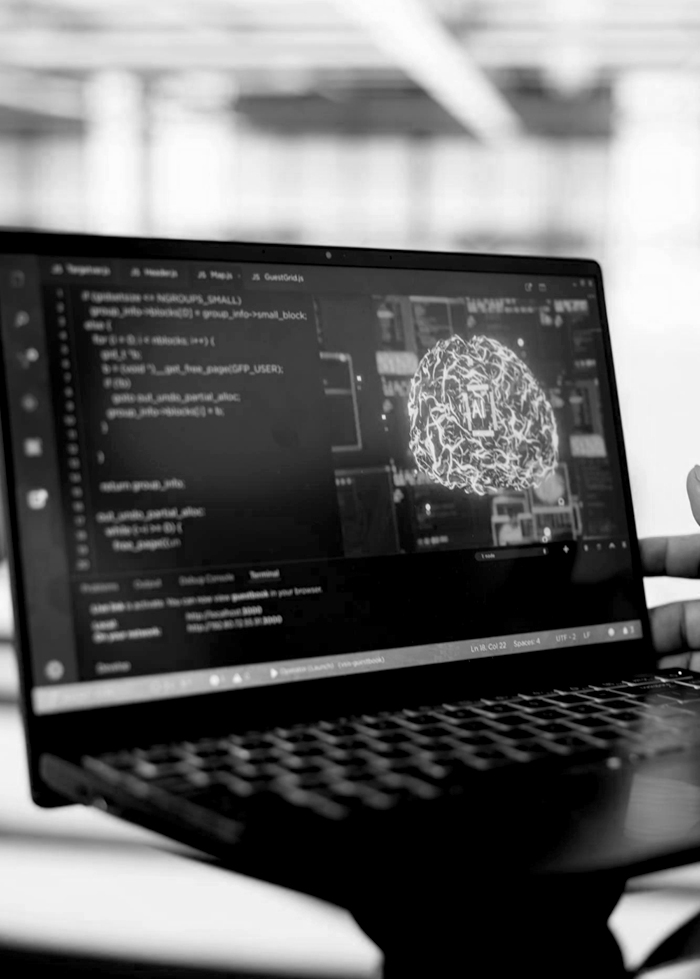








Education no longer means automatically sitting in a classroom while a teacher lectures at the front. Students can attend live classes from home, watch recorded lessons, complete interactive simulations, receive automated feedback, collaborate remotely, and increasingly use AI-powered tools to support their learning.
- What Is Digital Learning?
- What Is Traditional Learning?
- Digital Learning Offers Greater Flexibility
- Traditional Learning Provides Built-In Structure
- The Classroom Makes Human Interaction Easier
- Digital Learning Gives Students More Control Over Pace
- Technology Can Make Learning More Interactive
- Traditional Learning Remains Important for Hands-On Skills
- Which Produces Better Academic Results?
- Digital Learning vs. Traditional Learning at a Glance
- Is Blended Learning the Better Compromise?
- Frequently Asked Questions
- The Best Learning Environment May Use Both
Yet traditional classroom education remains enormously important. Face-to-face discussion, immediate teacher support, practical activities, and the social environment of a classroom can provide experiences that aren’t always easy to reproduce digitally.
So, when comparing digital learning vs. traditional learning, which approach is actually better?
Research suggests there isn’t a universal winner. A large second-order meta-analysis covering 19 previous meta-analyses and 841 primary studies found a small overall advantage for distance learning, but results differed according to factors such as educational level and instructional setting. More recent research also reinforces an important point: how education is designed can matter more than whether it happens through a screen or inside a classroom.



What Is Digital Learning?
Digital learning is a broad term covering education supported or delivered through digital technologies. It doesn’t necessarily mean a student sits alone at home watching prerecorded videos.
According to the OECD, digital education can include fully online, hybrid, and blended approaches. Fully online education takes place remotely and may include live classes, self-paced activities, or both. Hybrid education replaces some face-to-face instruction with online instruction, while blended learning keeps in-person teaching but complements it with digital activities and resources.
Digital learning might therefore involve video lessons, online quizzes, virtual classrooms, simulations, educational games, collaborative documents, learning-management systems, digital textbooks, or AI-assisted learning.
The technology is the medium. It isn’t automatically the teaching method.
What Is Traditional Learning?
Traditional learning generally refers to education delivered primarily through face-to-face interaction in a physical environment such as a school, university, training center, or classroom.
Students usually follow a defined timetable and learn alongside classmates while an instructor is physically present. Teaching can include lectures, discussions, group projects, demonstrations, laboratories, practical exercises, and individual support.



Traditional education isn’t necessarily technologically primitive, either. A teacher can use laptops, interactive displays, online quizzes, and digital resources while still running a fundamentally face-to-face course.
In practice, the boundary between traditional and digital learning has become increasingly blurred.
Digital Learning Offers Greater Flexibility
Flexibility is one of digital education’s strongest advantages.
An asynchronous course may allow students to study when their schedule permits rather than attending a classroom at a fixed hour. Recorded lessons can be paused, replayed, or revisited, giving learners greater control over their pace.
This can be particularly useful for adults balancing education with employment, childcare, or other responsibilities. OECD analysis of digital adult education specifically highlights scheduling flexibility as an important advantage for working professionals and parents.
Geography matters less too. Someone living far from a university or training center can potentially access courses that would otherwise require relocation or significant travel.
Traditional education generally provides less flexibility because classes take place at scheduled times and locations. However, that limitation can also create something valuable: structure.
Traditional Learning Provides Built-In Structure
Having to be in a classroom at 9:00 a.m. removes one decision from your day.


You’re there.
In a self-paced digital course, nobody may notice whether you watch today’s lesson now, tomorrow, or three weeks from now. That freedom can work beautifully for independent learners but become a serious problem for students who struggle with procrastination.
Research published in 2025 examining more than 11,000 students found a positive relationship between self-regulated learning strategies and academic achievement in online and blended environments. The relationship was relatively small, but the finding reinforces the importance of students being able to manage aspects of their own learning.
Traditional environments naturally provide more external structure through timetables, physical attendance, teachers, classmates, and scheduled activities.
The Classroom Makes Human Interaction Easier
One major advantage of traditional education is immediate human communication.
A confused student can raise their hand. A teacher can notice puzzled expressions and explain something differently. Students can debate an idea, work through a problem together, or have an informal conversation after class.
Digital learning can provide meaningful interaction too, particularly through live classes, discussion groups, collaborative projects, messaging, and video meetings. In fact, a 2026 meta-analysis covering 31 randomized controlled trials and 3,823 learners found that synchronous online webinars produced positive cognitive and affective outcomes compared with control conditions, including asynchronous and face-to-face formats.
The important distinction is therefore not simply online versus human interaction.
A well-designed live digital class can be highly interactive, while a traditional lecture containing 300 students can involve very little individual interaction at all.
Digital Learning Gives Students More Control Over Pace
Imagine that a teacher explains a difficult mathematics concept and you don’t understand the final step.
In a live classroom, the lesson may continue.
With a recorded digital lesson, you can pause, return 30 seconds, replay the explanation, search for supporting information, and try the example yourself before continuing.
Students who already understand a section can move forward more quickly, while those who need additional time can repeat difficult material without slowing down the entire class.
However, self-paced learning has a potential downside. Students can mistake repeatedly watching explanations for genuine learning.
Watching someone solve ten equations isn’t the same as solving them yourself.
Digital courses still need active practice, retrieval, problem-solving, feedback, and assessment if students are expected to develop durable knowledge.
Technology Can Make Learning More Interactive
Digital education can do things that textbooks and lectures alone cannot easily reproduce.
A science student might manipulate variables inside a simulation. A language learner can receive immediate pronunciation feedback. An engineering student can explore a virtual model, while adaptive software can adjust questions according to performance.
Artificial intelligence adds another layer. AI systems can potentially generate practice questions, explain concepts in different ways, provide tutoring, and adapt activities to individual learners.
But newer technology isn’t automatically better education.
The OECD’s 2026 Digital Education Outlook warns that using generative AI to successfully complete a task doesn’t necessarily produce learning. If students simply outsource intellectual work to AI, their immediate performance may improve without equivalent gains in knowledge or skills.
The same principle applies to educational technology generally. OECD research concludes that access to technology alone does not guarantee educational improvement; effective pedagogy remains essential.
Traditional Learning Remains Important for Hands-On Skills
Some subjects translate easily into digital formats. Others don’t.
You can learn the theory of welding from videos, but eventually you need to hold the equipment. A nursing student can study anatomy online, but clinical competence requires supervised practical experience. Chemistry simulations can demonstrate reactions without risk, but they don’t completely reproduce working in a real laboratory.
Physical education, healthcare, manufacturing, construction, laboratory science, performing arts, and many technical trades contain skills that depend heavily on physical practice.
This is where combining digital and traditional education can become particularly valuable.
Students can learn theory online and use face-to-face sessions for laboratories, demonstrations, discussion, feedback, and hands-on practice.
Which Produces Better Academic Results?
There is no simple answer.
One broad second-order meta-analysis examining hundreds of primary studies found a small overall positive effect for distance learning compared with face-to-face learning. However, the effect differed across educational settings and was larger in higher education than K–12 education.
Individual studies can reach different conclusions. A 2025 study involving 1,160 anatomy students, for example, found somewhat better results from face-to-face learning than e-learning, although the differences were described as modest.
Another 2025 experimental study involving undergraduates found similar academic outcomes between synchronous virtual and face-to-face teaching.
These apparently different findings illustrate why claims such as “online learning is better” or “classrooms are always more effective” are too simplistic.
The subject, age of learners, course design, instructor, technology, student motivation, interaction, assessment, and quality of teaching can all influence the outcome.
Digital Learning vs. Traditional Learning at a Glance
| Factor | Digital Learning | Traditional Learning |
|---|---|---|
| Location | Can often happen anywhere | Usually requires physical attendance |
| Schedule | Can be highly flexible | Usually fixed |
| Learning pace | Often more student-controlled | Often determined by class pace |
| Teacher interaction | Digital, live or delayed | Direct face-to-face interaction |
| Social experience | Depends heavily on course design | Naturally provides physical interaction |
| Recorded lessons | Common | Less common |
| Self-discipline required | Usually higher | More external structure |
| Hands-on activities | Can be limited | Generally easier to provide |
| Technology dependence | High | Usually lower |
| Travel | Often unnecessary | Usually required |
| Course availability | Potentially global | Limited partly by location |
| Immediate assistance | Depends on format | Often easier during class |
Is Blended Learning the Better Compromise?
For many situations, the most interesting question isn’t whether digital or traditional learning should win.
It’s how to combine them intelligently.
Blended learning keeps face-to-face instruction while incorporating digital resources and activities. Students might watch material before class, complete interactive exercises online, and then use classroom time for discussion, problem-solving, experiments, or individualized help.
This allows technology to handle activities it performs particularly well without eliminating the human elements of education.
Recent OECD guidance similarly emphasizes that technology produces the greatest educational value when integrated with strong teaching practices rather than treated as a replacement for them.
That may ultimately be where the digital-versus-traditional debate becomes less important.
Frequently Asked Questions
Is digital learning better than traditional learning?
Not universally. Research has found situations in which digital learning performs as well as or better than face-to-face instruction, while other studies find advantages for traditional teaching. Course quality, learner characteristics, subject matter, and teaching methods all influence outcomes.
Instead of choosing based solely on format, examine how the actual course works. A well-designed digital program can be substantially better than a poor classroom course, and the reverse is equally possible.
What is the biggest advantage of digital learning?
Flexibility is one of its clearest advantages. Students can potentially learn from different locations and, in asynchronous programs, study around work, family, or other responsibilities.
Digital courses can also provide recorded explanations, interactive resources, and access to programs that may not exist locally.
What is the biggest advantage of traditional learning?
Direct human interaction and structure are major advantages. Teachers can provide immediate feedback, students regularly interact with classmates, and scheduled attendance creates an external routine.
Traditional learning is also particularly valuable when physical equipment, laboratories, clinical practice, or other hands-on activities are essential.
Is digital learning the same as online learning?
Not exactly. Online learning is one form of digital education, but digital learning is broader.
A student sitting in a physical classroom and using an interactive simulation is participating in digital learning even though the class isn’t online. Blended and hybrid programs also combine digital technology with physical education in different ways.
Which type is better for children?
That depends on age, individual needs, course design, teacher support, and the learning activity. Younger students may particularly benefit from strong structure, social interaction, hands-on activities, and direct teacher guidance.
Digital resources can still complement these experiences effectively. The important question isn’t simply how much technology is present, but whether it supports a clear educational purpose.
The Best Learning Environment May Use Both
Digital learning offers something traditional education has historically struggled to provide: enormous flexibility, access to resources from almost anywhere, repeatable lessons, interactive technology, and potentially more personalized learning experiences.
Traditional education offers something technology cannot automatically reproduce: direct human relationships, physical collaboration, structured environments, and immediate real-world interaction.
Neither format guarantees good education.
What matters is what students are actually doing. Are they thinking, practicing, asking questions, receiving useful feedback, solving problems, and developing knowledge they can retrieve independently?
If the answer is yes, technology can be an extremely powerful educational tool. If the answer is no, replacing a notebook with a tablet or a classroom with a video platform won’t magically fix the problem.
The future of education is therefore unlikely to be entirely digital or entirely traditional. In many situations, the strongest approach may simply be using each one for what it does best.