





Why Choose Long-Blooming Flowers?
Every gardener dreams of a flower bed that’s bursting with color all season long. The secret isn’t necessarily planting more flowers—it’s choosing varieties that naturally bloom for weeks or even months.
- Why Choose Long-Blooming Flowers?
- Zinnias
- Petunias
- Marigolds
- Geraniums
- Cosmos
- Coneflowers (Echinacea)
- Black-Eyed Susan
- Salvia
- Verbena
- Lantana
- Begonias
- Calibrachoa (Million Bells)
- Dahlias
- Lavender
- Coreopsis
- The Best Summer Bloomers at a Glance
- Tips for More Flowers All Season Long
- How to Keep Your Garden Blooming from Spring to Autumn
- Frequently Asked Questions
Many summer bloomers continue flowering from late spring until autumn, especially if you regularly remove faded blooms, water during dry spells, and feed them occasionally. Mixing annuals and perennials is one of the easiest ways to keep your garden looking vibrant throughout the season.
Zinnias
Zinnias are among the best flowers for continuous summer color.
These cheerful annuals come in almost every color imaginable and thrive in full sun. They also make excellent cut flowers, and the more you harvest or deadhead them, the more blooms they produce.
Best growing conditions:
- Full sun
- Well-drained soil
- Moderate watering
Petunias
Petunias are a classic choice for hanging baskets, containers, and flower beds.
Modern varieties bloom continuously throughout summer and are available in single, double, trailing, and compact forms.
Regular deadheading and occasional feeding help keep plants covered in flowers for months.
Marigolds
Marigolds are one of the easiest flowers for beginners.
Their bright yellow, orange, and red blooms appear continuously from early summer until frost, and they’re known for attracting pollinators while helping deter certain garden pests.
They’re also highly tolerant of heat and dry conditions once established.
Geraniums
Geraniums are popular because they flower almost non-stop with very little effort.
They’re ideal for:
- Window boxes
- Patio containers
- Garden borders
Removing faded flower heads encourages fresh blooms throughout the season.
Cosmos
Cosmos produce delicate, daisy-like flowers on tall stems that sway beautifully in the breeze.
Despite their elegant appearance, they’re surprisingly tough and continue flowering until the first frost if spent blooms are removed regularly.
They also attract bees and butterflies, making them a fantastic addition to pollinator-friendly gardens.
Coneflowers (Echinacea)
Coneflowers are hardy perennials that bloom for months while attracting bees, butterflies, and birds.

Once established, they’re drought-tolerant and require very little maintenance.
Popular flower colors include:
- Purple
- White
- Pink
- Orange
- Yellow
Black-Eyed Susan
Black-Eyed Susans brighten gardens with their golden-yellow petals and dark centers.
These hardy perennials bloom throughout much of summer and often continue into early autumn.
They’re excellent for wildlife gardens because pollinators love them.
Salvia
Salvia produces colorful flower spikes that bloom repeatedly throughout summer.
Available in shades of blue, purple, red, pink, and white, it’s one of the best plants for attracting bees, butterflies, and hummingbirds.
Cutting back faded flower spikes often encourages another flush of blooms.
Verbena
Verbena is prized for its clusters of colorful flowers that continue blooming through hot weather.
It works well in:
- Hanging baskets
- Containers
- Borders
- Rock gardens
Its excellent heat tolerance makes it a reliable performer during long, hot summers.
Lantana
If you live in a warm climate, lantana is one of the longest-flowering plants you can grow.
Its vibrant flower clusters constantly change color as they mature, creating a striking display throughout the season.
Lantana thrives in full sun and is highly drought-tolerant once established.
Begonias
For gardens with partial shade, begonias are hard to beat.
Unlike many flowering plants, they continue producing blooms even in lower light conditions.
They’re particularly well suited to:
- Shady borders
- Containers
- Hanging baskets
Calibrachoa (Million Bells)
Often mistaken for miniature petunias, calibrachoa produces hundreds of small trumpet-shaped flowers throughout the growing season.
It performs exceptionally well in containers and hanging baskets, where its trailing stems create impressive displays.
Many modern varieties require little or no deadheading to continue flowering.
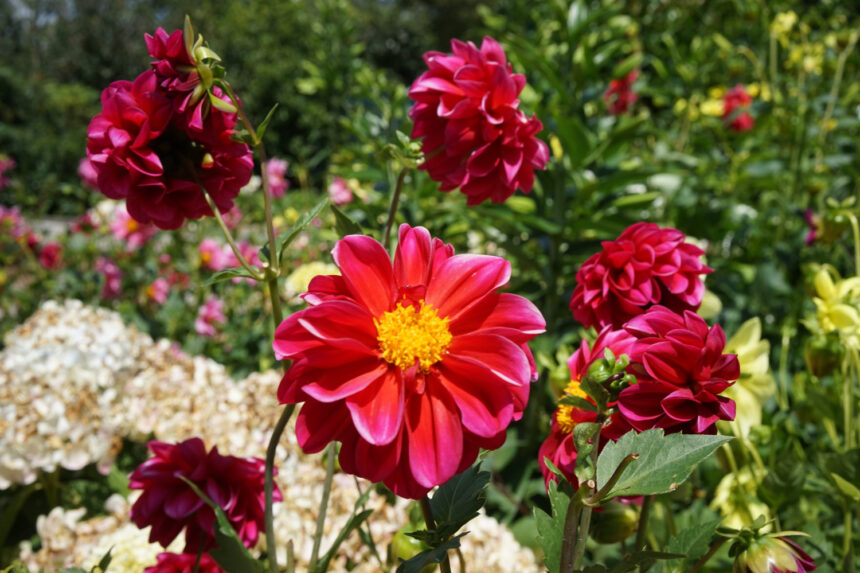
Dahlias
Dahlias are famous for their spectacular flowers, which bloom from midsummer until the first frost.
Available in countless shapes, sizes, and colors, they’re a favorite among gardeners who want dramatic displays and beautiful cut flowers.
Regular harvesting or deadheading encourages even more blooms.
Lavender
Lavender isn’t just grown for its fragrance.
Its purple flower spikes bloom throughout summer while attracting bees and other beneficial pollinators.
Once established, lavender requires very little watering and performs best in full sun with excellent drainage.
Coreopsis
Coreopsis is a dependable perennial that produces masses of yellow, orange, pink, or red flowers over a very long flowering period.
It’s drought-tolerant, easy to grow, and ideal for cottage gardens or wildflower borders.
The Best Summer Bloomers at a Glance
| Flower | Annual or Perennial | Sun Requirements | Bloom Time |
|---|---|---|---|
| Zinnia | Annual | Full sun | Summer to frost |
| Petunia | Annual | Full sun | All summer |
| Marigold | Annual | Full sun | Summer to frost |
| Geranium | Annual (commonly grown) | Full sun | All summer |
| Cosmos | Annual | Full sun | Summer to frost |
| Coneflower | Perennial | Full sun | Summer to early autumn |
| Black-Eyed Susan | Perennial | Full sun | Summer to autumn |
| Salvia | Perennial/Annual | Full sun | Summer |
| Verbena | Annual/Perennial | Full sun | Summer to frost |
| Lantana | Perennial in warm climates | Full sun | Summer to frost |
| Begonia | Annual | Partial shade | Summer to frost |
| Calibrachoa | Annual | Full sun | All summer |
| Dahlia | Perennial in frost-free climates | Full sun | Mid-summer to frost |
| Lavender | Perennial | Full sun | Summer |
| Coreopsis | Perennial | Full sun | Summer to autumn |
Tips for More Flowers All Season Long
Even long-blooming plants perform better with a little regular care.
To encourage continuous flowering:
- Remove faded blooms regularly.
- Water deeply during prolonged dry periods.
- Feed flowering plants according to their needs.
- Plant in locations with the recommended amount of sunlight.
- Apply mulch to help conserve soil moisture.
- Remove damaged flowers and stems promptly.
Many flowering annuals respond particularly well to deadheading, while some perennials benefit from cutting back spent flower stems to encourage another flush of blooms.
How to Keep Your Garden Blooming from Spring to Autumn
Instead of relying on just one type of flower, combine plants with overlapping bloom times.
For example:
- Early summer: Lavender, salvia, geraniums
- Mid-summer: Zinnias, petunias, marigolds, cosmos
- Late summer into autumn: Coneflowers, black-eyed Susans, dahlias, coreopsis
This layered approach keeps your borders colorful for months and provides a continuous source of nectar for bees, butterflies, and other pollinators.
Frequently Asked Questions
Which flower blooms the longest?
Petunias, zinnias, marigolds, calibrachoa, and cosmos are among the longest-blooming annuals, often flowering continuously until the first frost with proper care.
What flowers bloom all summer with little maintenance?
Lavender, coneflowers, black-eyed Susans, coreopsis, lantana, and salvia are excellent low-maintenance choices once established.
Which flowers are best for pollinators?
Lavender, salvia, cosmos, coneflowers, verbena, and coreopsis are all excellent choices for attracting bees, butterflies, and other beneficial insects.
Do I need to deadhead flowers all summer?
Many annuals and repeat-blooming perennials produce more flowers when faded blooms are removed regularly. While not every plant requires deadheading, it often helps extend the flowering season and keeps plants looking their best.