






When people imagine the ideal family meal, they often picture everyone sitting around a beautifully prepared dinner, happily discussing their day while phones remain somewhere in another room.
- Stop Trying to Create the “Perfect” Family Dinner
- It Doesn’t Have to Be Dinner
- Make the Table a Low-Pressure Place to Talk
- Adults Need to Share Too
- Try the “One Good Thing, One Difficult Thing” Question
- Don’t Turn Dinner Into a Performance Review
- Put Phones Away—Including the Adults’ Phones
- Let Children Help Choose the Menu
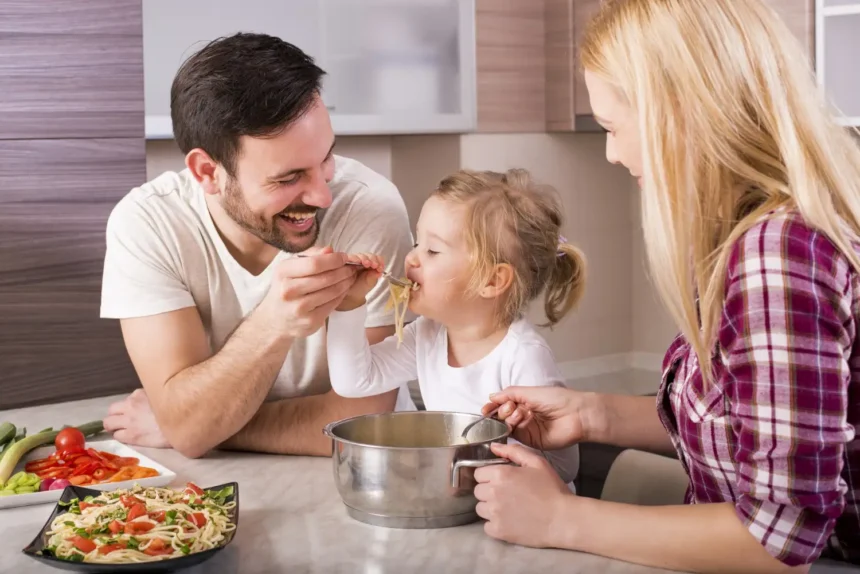
- Cook Together Occasionally
- Use Food to Tell Family Stories
- Explore Another Country Through Dinner
- Don’t Force Everyone to Eat the Same Amount
- Don’t Make Someone’s Diet the Main Conversation
- Let Silence Happen
- Invite Other People Occasionally
- Let Children Invite a Friend
- Make Ordinary Food Good Enough
- Share the Work Afterward Too
- Try Conversation Games When Things Feel Repetitive
- Don’t Force Teenagers to Love Family Dinner
- When Life Is Busy, Make the Meal Smaller Rather Than Abandoning It
- What Research Says About Family Meals
- Create a Ritual Everyone Recognizes
- What Makes a Family Meal Meaningful?
Real family dinners don’t always look like that.
Someone doesn’t like the food. A teenager answers every question with “fine.” A younger child spills their drink. One parent is exhausted after work, another person needs to leave for practice in 20 minutes, and nobody is particularly interested in having a profound conversation about life.
That’s completely normal.



A meaningful family meal doesn’t require perfect behavior, homemade food, or fascinating conversation every evening. Its value comes from something much simpler: regularly creating a moment when the people living together have an opportunity to reconnect.
Stop Trying to Create the “Perfect” Family Dinner
Putting too much importance on family meals can ironically make them less enjoyable.
If parents expect every dinner to become a wholesome family experience, ordinary behavior can feel disappointing. Children become pressured to talk, everyone is expected to stay cheerful, and minor disagreements suddenly seem like evidence that family dinner isn’t “working.”
Lower the expectations.
Some meals will involve interesting conversations. Others will involve jokes, complaints about school, discussion about tomorrow’s schedule, or almost nothing memorable at all.
The meal doesn’t need to produce a special moment every time.



What matters is that the opportunity exists.
It Doesn’t Have to Be Dinner
“Family dinner” gets most of the attention, but dinner can be the worst possible time for some households.
Parents work late. Children have sports. Teenagers have activities. Someone works evenings. Younger children may need to eat much earlier than everyone else.
Look for the meal your family can realistically share.
That could be breakfast before school, Saturday lunch, Sunday brunch, an afternoon snack, or dinner several nights each week.
A family that genuinely enjoys breakfast together three times a week isn’t failing because it can’t manage seven formal dinners.
Consistency matters more than following somebody else’s schedule.
Make the Table a Low-Pressure Place to Talk
Children aren’t always ready to discuss their lives when adults decide it’s conversation time.



Ask a teenager:
“How was school?”
and there’s a reasonable chance you’ll receive:
“Fine.”
The question is so broad that it invites an equally broad answer.
More specific questions can create better conversations:
“What made you laugh today?”
“What was the strangest thing that happened at school?”
“Who did you spend the most time with today?”
“If you could cancel one lesson tomorrow, which would you choose?”
“What are you looking forward to this week?”
Not every question needs to be educational or emotionally profound. Sometimes asking whether a gorilla could beat a bear creates a more memorable dinner conversation than asking everyone to describe their feelings.
The objective is connection, not interrogation.
Adults Need to Share Too
Family conversation becomes strange when children are expected to provide detailed reports while adults reveal nothing.
If you ask what happened during your child’s day, tell them something about yours too.
You don’t need to burden children with adult problems, but age-appropriate stories help create genuine conversation. Mention the funny thing a colleague said, something you learned, a mistake you made, an annoying traffic jam, or something you’re looking forward to.
This sends an important message.
Conversation isn’t something adults extract from children.
It’s something people exchange.
Try the “One Good Thing, One Difficult Thing” Question
Families who struggle to start conversations can use simple recurring prompts.
One option is for everyone to mention one thing that went well during the day and one thing that was difficult.
A child might say:
“Football practice was great, but the maths test was horrible.”
A parent might answer:
“I finally finished something difficult at work, but traffic was terrible.”
Nobody has to provide a long explanation.
Over time, these small pieces of information help family members understand what is happening in each other’s lives.
And occasionally, an apparently minor answer opens the door to a much more important conversation.
Don’t Turn Dinner Into a Performance Review
There’s a time to discuss poor grades, unfinished homework, household responsibilities, inappropriate behavior, and other problems.
That time doesn’t always need to be dinner.
If every family meal becomes:
“Why haven’t you cleaned your room?”
“What happened with that maths test?”
“Have you finished your homework?”
“Why did your teacher email me?”
children may begin associating the table with criticism.
Important issues shouldn’t be ignored. But when possible, protect at least some shared meals from becoming disciplinary meetings.
Let the table occasionally be somewhere everyone can simply exist together without needing to defend their performance that day.
Put Phones Away—Including the Adults’ Phones
Phones can interrupt family meals even when nobody is actively using them.
A notification arrives.
Someone looks.
Another person checks theirs.
Within a few minutes, four people are physically sitting together while mentally participating in four different places.
Creating some screen-free meals can help preserve shared attention.
The rule should apply to adults too. It’s difficult to convince children that dinner is important family time while repeatedly checking work messages beneath the table.
Emergencies and genuine work responsibilities happen, of course. If you’re expecting an important call, simply explain it.
The goal isn’t technological purity.
It’s preventing automatic phone checking from becoming the default dinner activity.
Let Children Help Choose the Menu
Food becomes more interesting when children have some influence over it.
Younger children can choose between two vegetables or decide which fruit accompanies a meal. Older children can suggest entire dinners, help create a weekly menu, or select a recipe they want the family to try.
You could even give each family member one meal to choose during the week.
This naturally creates variety because everyone’s preferences are different.
One person chooses tacos.
Another wants pasta.
Someone requests homemade pizza.
Another chooses a family recipe that hasn’t been made for months.
Children don’t need complete control over the menu, but participation gives them some ownership of the meal.
Cook Together Occasionally
The meaningful part of a family meal doesn’t have to begin when everyone sits down.
Preparing food together can be just as valuable.
A young child can wash vegetables, mix ingredients, arrange toppings, or set the table. Older children can chop ingredients with appropriate instruction and supervision, follow recipes, prepare sauces, and eventually cook complete dishes.
Teenagers can take responsibility for dinner occasionally.
That isn’t merely family bonding. It’s teaching an essential life skill.
A teenager who leaves home knowing how to prepare five or ten inexpensive, reasonably nutritious meals has learned something genuinely useful.
Use Food to Tell Family Stories
Recipes carry memories.
Perhaps a particular soup came from a grandparent. Maybe there’s a dish you always ate on holiday, something traditionally prepared for birthdays, or a recipe associated with the country or region where your family originated.
Tell those stories.
Children may have eaten their grandmother’s recipe dozens of times without knowing why she made it that way or where it came from.
Food offers a natural way to talk about relatives, culture, travel, childhood, traditions, and family history without turning the conversation into a formal lesson.
You can also create new traditions.
Perhaps Friday becomes homemade-pizza night. Maybe everyone makes pancakes on the first Sunday of the month, or each birthday person chooses their favorite dinner.
Small traditions are often the things people remember decades later.
Explore Another Country Through Dinner
Family meals can also become an easy way to introduce children to the wider world.
Occasionally choose a country and prepare something associated with its cuisine. Find it on a map, learn how the dish is traditionally eaten, and talk briefly about the place.
You don’t need to turn dinner into geography homework.
The experience can simply be:
“Tonight we’re trying something we’ve never eaten before.”
Over time, children encounter different ingredients, flavors, traditions, and ways of eating.
Some dishes will become family favorites.
Others will receive terrible reviews.
Both outcomes can be fun.
Don’t Force Everyone to Eat the Same Amount
Family meals can quickly stop feeling meaningful when the main conversation becomes how much everyone has eaten.
Children’s appetites fluctuate.
One evening they may request another serving. On another day they might eat very little.
Parents and caregivers can provide an appropriate selection of foods while allowing children to respond to their hunger and fullness cues. Constantly negotiating over “three more bites” can turn the table into a battleground.
Family meals should help children develop a comfortable relationship with eating, not make them feel that every plate is an examination they need to pass.
Don’t Make Someone’s Diet the Main Conversation
Comments about bodies and food can easily become part of dinner conversation:
“I’ve been so bad today.”
“I can’t eat bread.”
“That has too many calories.”
“I need to lose five kilos.”
“You’ve eaten a lot.”
“Are you really having seconds?”
Children hear these comments even when they aren’t directed at them.
Try to avoid making guilt, weight, or appearance the central language surrounding food. Meals can include nutritious foods and occasional treats without everyone needing to assign moral value to what is being eaten.
Similarly, avoid commenting excessively on how much another person eats.
Someone asking for seconds doesn’t need an audience.
Let Silence Happen
A meaningful family meal doesn’t require constant conversation.
Sometimes everyone is tired.
There may be comfortable stretches where people simply eat.
That’s fine.
Trying to fill every second can make the experience feel artificial. Silence can actually be a sign that people feel comfortable enough around one another not to perform.
Conversation usually returns naturally.
Invite Other People Occasionally
Family meals don’t always need to include only the immediate household.
Invite grandparents, relatives, neighbors, or your children’s friends occasionally.
A larger table changes the dynamic. Children hear different stories, interact with different generations, and see hospitality as part of normal family life.
It doesn’t require an elaborate dinner party.
A pot of pasta can feed additional people.
The value comes from welcoming someone, not impressing them.
Let Children Invite a Friend
As children grow older, their friends become increasingly important.
Allowing them to occasionally invite someone for dinner can help parents understand the social world their child is living in without interrogating them about it.
Teenagers often communicate differently when friends are present. Parents may discover interests, jokes, stories, and parts of their child’s personality that don’t normally appear during family conversation.
The objective isn’t surveillance.
It’s making your home somewhere your children feel comfortable bringing people.
Make Ordinary Food Good Enough
Family meals don’t need to be elaborate.
A shared dinner can be scrambled eggs and toast, pasta with tomato sauce, soup, sandwiches, leftovers, takeaway food, or something pulled from the freezer.
If the expectation that every family meal must be freshly cooked creates stress for the person preparing it, that expectation defeats part of the purpose.
A simple meal eaten together can be more meaningful than an impressive meal that leaves one exhausted parent resentful because they spent two hours preparing it.
The food supports the gathering. It doesn’t have to justify it.
Share the Work Afterward Too
The person who cooks shouldn’t automatically become the person who clears the table, loads the dishwasher, wipes the kitchen, stores leftovers, and takes out the rubbish.
Make cleanup part of the shared routine.
Young children can bring safe items to the kitchen. Older children can clear plates, wipe the table, load a dishwasher, wash dishes, or store leftovers.
This has another advantage: conversation often continues after the official meal ends.
Some of the best discussions happen while two people are standing beside each other washing dishes rather than sitting face-to-face being asked to “talk.”
Try Conversation Games When Things Feel Repetitive
If meals have become predictable, introduce an occasional game.
Everyone could answer the same unusual question:
“If you could instantly become excellent at one skill, what would it be?”
“What would you do with €1 million if you couldn’t spend it on yourself?”
“Which three foods would you keep if you could only eat ten foods forever?”
“What invention do you wish existed?”
“What’s something you believed when you were younger that seems ridiculous now?”
These questions work because there isn’t a correct answer.
Children get to discover things about adults too, which makes the conversation feel less one-sided.
Don’t Force Teenagers to Love Family Dinner
Teenagers naturally become more independent.
They want friends, privacy, activities, and control over their schedules. Requiring every teenager to enthusiastically participate in a long family dinner seven evenings a week may create more resentment than connection.
Keep inviting them.
Maintain reasonable family expectations.
But allow some flexibility.
A teenager who eats with the family several times a week and genuinely participates may be getting far more from those meals than one who is physically required to sit at the table every night while silently counting the minutes until they can leave.
Meaningful connection cannot be completely scheduled.
When Life Is Busy, Make the Meal Smaller Rather Than Abandoning It
Some evenings simply don’t work.
One child has football at 6:00. Another finishes tutoring at 7:30. A parent arrives home at 8:00.
Instead of concluding that family meals are impossible, look for smaller opportunities.
Ten minutes together over breakfast counts.
Sharing fruit and sandwiches before practice counts.
Sunday lunch counts.
Pizza at the kitchen counter counts.
The important part isn’t the furniture or the time of day.
It’s creating recurring moments when everyone isn’t rushing in a different direction.
What Research Says About Family Meals
Research has repeatedly found associations between more frequent family meals and positive outcomes in children and adolescents, including aspects of diet quality and psychosocial health.
However, those findings need to be interpreted sensibly.
Eating dinner together isn’t a magical intervention that automatically produces healthier or happier children. Families who frequently eat together may differ in many other ways, and the quality of the interaction matters.
A meal filled with criticism, arguments, pressure, or hostility isn’t automatically beneficial simply because everyone sat around the same table.
Frequency matters less than what happens while you’re there.
Create a Ritual Everyone Recognizes
The easiest traditions are the ones that don’t require much effort.
Maybe Sunday breakfast always involves pancakes. Friday evening could be pizza night. Once a month, someone chooses a new recipe.
Perhaps everyone shares the funniest thing that happened during the week at Sunday lunch.
These rituals provide continuity.
Children grow surprisingly quickly, schedules change, people move away, and family life rarely stays in one phase for very long.
Repeated ordinary moments become familiar reference points through all those changes.
What Makes a Family Meal Meaningful?
It isn’t the expensive ingredients.
It isn’t whether everyone eats vegetables.
It isn’t having a beautifully decorated dining room or preparing dinner from scratch.
And it certainly isn’t producing an Instagram-perfect table every evening.
A meaningful family meal is one where people feel reasonably comfortable being themselves. They can talk without being interrogated, disagree without destroying the evening, laugh about something stupid, tell a story, complain about their day, or occasionally say very little.
Sometimes you’ll have an unexpectedly important conversation.
Most of the time, you won’t.
You’ll simply eat.
But when those ordinary meals happen again and again over years, they create something bigger: a familiar place where family members regularly return to one another.
That is what makes them meaningful.