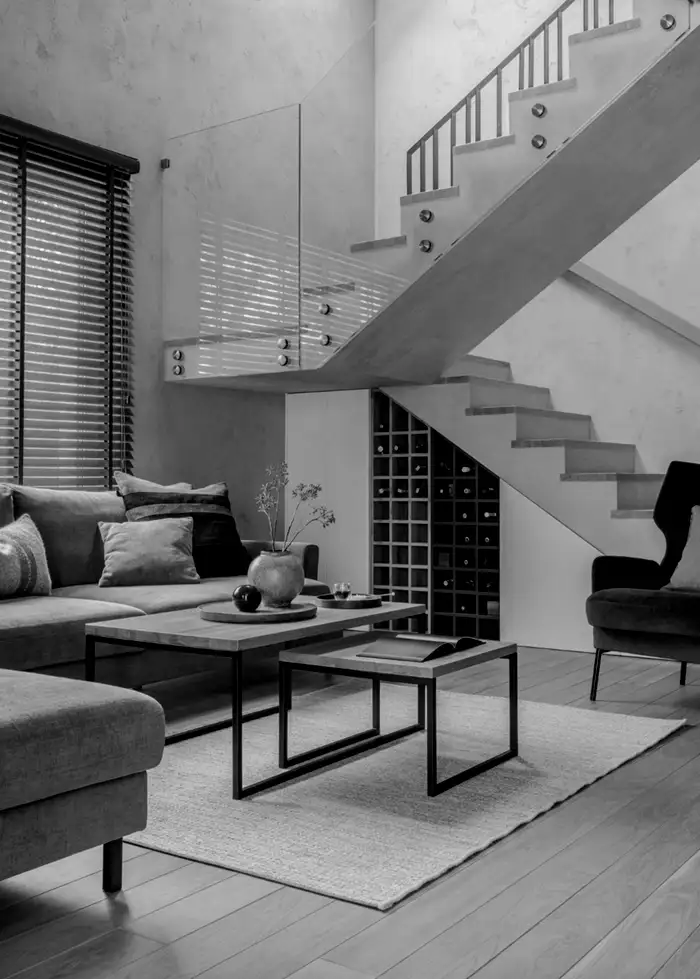








A calm home isn’t necessarily a perfectly decorated home.
- Start With the Sources of Everyday Friction
- Reduce Visual Clutter Without Trying to Become a Minimalist
- Give Busy Areas a Purpose
- Make Your Bedroom Less Stimulating
- Don’t Ignore Noise
- Natural Light and Fresh Air Can Change a Room Quickly
- Add Nature Without Turning Your House Into a Jungle
- A Supportive Home Isn’t Created by Interior Design
- Make Household Responsibilities Visible
- Create Routines, but Don’t Turn Your Home Into a Workplace
- Protect Personal Space
- Create Some Phone-Free Moments
- Make It Easy to Spend Time Together
- Your Home Doesn’t Need to Be Perfectly Clean
- Think About What You Notice When You Walk Through the Door
- Let the Home Reflect the People Living There
- Start With Five Changes, Not Fifty
It doesn’t need neutral-colored furniture, expensive candles, spotless countertops, or a living room that looks like nobody actually lives there. A home can be small, busy, slightly messy, and still feel remarkably peaceful.
What matters more is how the space functions and how people feel inside it.
A supportive home gives you somewhere to recover from the outside world rather than introducing another source of pressure. It provides enough structure to prevent constant chaos, but enough flexibility that people can actually live comfortably.



Creating that environment involves both the physical home and the relationships within it.
Start With the Sources of Everyday Friction
Before buying storage boxes or rearranging furniture, identify what regularly makes your home stressful.
Perhaps mornings become chaotic because nobody can find what they need. Maybe the kitchen constantly accumulates dishes, one person feels responsible for every household task, or there’s nowhere quiet to work.
Small frustrations become surprisingly exhausting when they repeat every day.
Instead of attempting a complete home transformation, identify the three recurring problems that create the most tension and address those first.
If everyone constantly loses their keys, create one permanent place for keys near the entrance. If laundry creates arguments, agree on a simple system for sorting and washing it. If the kitchen becomes overwhelming every evening, establish a short cleanup routine after dinner.



A calmer home often comes from removing repeated friction rather than adding more things.
Reduce Visual Clutter Without Trying to Become a Minimalist
Clutter can make a space feel busier, particularly when frequently used surfaces become covered with unrelated objects. However, you don’t need to throw away half your possessions to create a calmer environment.
Start with the places you see most often: the kitchen counter, dining table, entrance, sofa area, bedside table, and desk.
Give frequently used objects logical homes and make those homes easy to use. A beautifully organized system that requires opening three containers to put something away probably won’t survive normal family life.
The goal isn’t an empty house. It’s a house where you can find things without searching and clear a room without launching a major cleaning project.
Give Busy Areas a Purpose
Rooms often become stressful when they’re expected to do everything simultaneously.
A dining table becomes an office, homework station, storage area, mail center, craft table, and occasionally somewhere people actually eat. The result is that one activity constantly interferes with another.
Even in a small home, you can create functional zones rather than dedicating entire rooms to individual activities.



A particular chair can become the reading spot. One section of the kitchen counter can remain clear for food preparation. A small desk can become the designated work area, while baskets or drawers can hold materials when work is finished.
Physical boundaries help create mental ones. When possible, it is useful to have some distinction between where you work, where you socialize, and where you rest.
Make Your Bedroom Less Stimulating
If there’s one room worth protecting from unnecessary chaos, it’s the bedroom.
You don’t need to transform it into a luxury hotel. Concentrate on removing things that make relaxation harder, particularly excessive clutter, uncomfortable temperature, disruptive light, and unnecessary noise.
Light deserves particular attention because it plays an important role in regulating the body’s circadian rhythm. Bright light in the evening can affect the biological processes associated with sleep, while morning daylight helps reinforce the body’s daily timing.
Practical improvements can be remarkably simple: curtains that block unwanted outside light, comfortable bedding, somewhere to place clothes rather than throwing them onto a chair, and lighting that doesn’t make the room feel like an office at midnight.
Your bedroom should visually communicate “the day is ending,” not “here are seventeen unfinished tasks.”
Don’t Ignore Noise
Some homes are stressful because they never become quiet.
Television plays in one room, somebody watches videos in another, notifications constantly sound, appliances run, and conversations compete with everything else.
You don’t need absolute silence, but controlling unnecessary background noise can noticeably change how a room feels.
Headphones can help when several people want different entertainment. Soft furnishings such as curtains, rugs, upholstered furniture, and bookshelves can reduce some of the harsh reflections that make rooms sound louder.
Most importantly, households can agree that not every device needs to produce sound all the time.
Occasional quiet isn’t emptiness. It gives everyone’s attention somewhere to rest.
Natural Light and Fresh Air Can Change a Room Quickly
Some of the simplest environmental improvements cost nothing.
Open curtains during the day. Arrange frequently used seating where natural light is available. When weather, outdoor air quality, security, and the building allow it, ventilate rooms regularly.
Indoor air quality is affected by pollutants generated both inside and outside the home. Cooking, cleaning products, combustion appliances, moisture, tobacco smoke, building materials, and outdoor pollution can all contribute.
Ventilation is therefore more than an aesthetic preference. Maintaining appropriate airflow and addressing pollutant sources are important parts of indoor environmental quality.
If you have persistent dampness, mold, unusual odors, or suspected ventilation problems, don’t simply cover them with fragrances. Find and address the underlying source.
Add Nature Without Turning Your House Into a Jungle
Plants can make interiors feel warmer and less sterile, and research has explored associations between exposure to natural environments and psychological well-being.
But you don’t need forty houseplants to benefit from a more natural-feeling environment.
A few plants, natural materials, views toward outdoor greenery, flowers, or simply allowing more daylight into a room can soften a space.
Choose plants appropriate for your home’s lighting conditions and consider pet or child safety before buying them. Some common houseplants can be toxic if eaten.
The objective is to make your home pleasant, not to acquire another collection of living things that stresses you because you forgot to water them.
A Supportive Home Isn’t Created by Interior Design
You can have perfect lighting, immaculate storage, and beautifully coordinated furniture while living in an emotionally exhausting household.
The way people communicate matters far more.
A supportive home should allow disagreement without humiliation. People should be able to express frustration without insults, intimidation, constant shouting, or deliberately making others uncomfortable.
That doesn’t mean nobody argues.
Families, couples, roommates, and children will disagree because people have different expectations, schedules, habits, personalities, and needs.
The healthier goal is learning to disagree without turning every problem into an attack on the other person.
Compare these two approaches:
“You’re unbelievably lazy. You never clean anything.”
and:
“The kitchen has been difficult to manage lately. Can we agree on who handles what?”
Both address the same underlying frustration. Only one begins by putting the other person on the defensive.
Make Household Responsibilities Visible
Few things destroy a peaceful home faster than one person quietly doing everything while everyone else assumes things somehow take care of themselves.
Household labor includes more than cleaning.
Someone notices the toothpaste is running out. Someone remembers appointments, plans meals, buys groceries, changes bedding, handles bills, organizes repairs, takes rubbish out, keeps track of children’s schedules, and realizes the refrigerator needs cleaning.
When responsibilities are invisible, resentment can grow.
Talk openly about what needs to be done and divide responsibilities in a way the household considers reasonable. “Fair” doesn’t necessarily mean everyone performs exactly the same number of tasks; different schedules, ages, abilities, and circumstances matter.
What matters is that responsibilities aren’t simply assigned by whoever becomes frustrated first.
Create Routines, but Don’t Turn Your Home Into a Workplace
Routine reduces decision-making.
If nobody knows when groceries are bought, dishes are washed, bills are handled, or laundry is done, these tasks repeatedly become urgent.
Simple routines prevent that.
Perhaps the kitchen gets a ten-minute reset each evening. Laundry happens on particular days. Groceries are ordered every Saturday. Everyone prepares what they need for the next morning before going to bed.
These systems should make life easier.
If your household schedule becomes so elaborate that missing Tuesday’s 18:15 bathroom-cleaning slot creates anxiety, you’ve probably gone too far.
A home needs structure, but it also needs forgiveness.
Protect Personal Space
Being close to people doesn’t mean being available to them every minute.
Children, teenagers, partners, relatives, and roommates can all benefit from periods when they aren’t expected to socialize.
In a large house, that might mean having a private room. In a small apartment, privacy may simply mean headphones, a particular chair, a closed door, or an agreement not to interrupt someone during certain periods.
Respecting privacy also means knocking, asking before borrowing personal possessions, and recognizing that wanting some time alone isn’t automatically rejection.
A supportive household allows both connection and independence.
Create Some Phone-Free Moments
Technology itself isn’t the enemy of a peaceful home. Phones provide entertainment, communication, work, education, navigation, and countless genuinely useful services.
The problem occurs when attention never leaves them.
Instead of attempting an unrealistic household-wide “digital detox,” choose a few situations where phones don’t need to dominate. Dinner is an obvious possibility, as is the first part of a family activity or the period immediately before sleep.
The objective isn’t to punish people for using technology. It’s to preserve moments where the people physically present aren’t constantly competing with notifications from somewhere else.
Make It Easy to Spend Time Together
A supportive home should contain opportunities for connection that don’t require elaborate planning.
Eating together occasionally, making coffee, watching a film, cooking, playing a game, walking after dinner, or simply sitting in the same room can create those opportunities.
Don’t force every shared moment to become “quality time.” Some of the best household relationships develop through ordinary, low-pressure interaction.
A home where everyone feels obligated to participate in scheduled bonding activities can become just as exhausting as one where nobody speaks.
Leave room for spontaneous connection.
Your Home Doesn’t Need to Be Perfectly Clean
Cleanliness matters for hygiene and comfort, but perfection is a different goal.
Homes are supposed to contain evidence of living.
There will sometimes be dishes in the sink, shoes near the door, toys on the floor, unfolded laundry, or a coffee cup beside the sofa. If maintaining an immaculate appearance requires everyone to constantly worry about making a mess, the house may look calm without actually feeling calm.
A more sustainable standard is to keep the home functional.
You should be able to cook safely, use the bathroom comfortably, find essential items, walk through rooms without obstacles, sleep in clean bedding, and restore reasonable order without needing an entire weekend.
“Comfortably lived in” and “neglected” are not the same thing.
Think About What You Notice When You Walk Through the Door
The entrance to your home sets an immediate tone.
If arriving home means stepping over shoes, searching for somewhere to put your bag, sorting through unopened mail, and discovering you can’t find your keys again, stress begins before you’ve taken your coat off.
Create an uncomplicated arrival zone.
You might have one place for shoes, hooks for coats and bags, a tray for keys, and a small location for incoming mail. Keep the system simple enough that everyone will actually use it.
The first few minutes at home should reduce friction rather than introduce another list of problems.
Let the Home Reflect the People Living There
A calm interior doesn’t have to be beige.
If bright artwork makes you happy, use it. Display photographs, books, travel souvenirs, children’s drawings, records, collections, or objects with personal meaning.
The objective isn’t to recreate whatever interior style is currently popular online.
In fact, constantly comparing an ordinary home with professionally photographed interiors can create exactly the dissatisfaction you’re trying to remove.
Your home should support your routines, relationships, interests, and personality. A room that looks perfect on social media but doesn’t work for the people living there isn’t well designed.
Start With Five Changes, Not Fifty
If your home currently feels chaotic, don’t attempt to fix every room and household habit simultaneously. That turns creating a peaceful environment into another stressful project.
Choose five manageable changes. Clear one frequently used surface, establish a permanent location for everyday essentials, improve the bedroom environment, agree on one household responsibility that currently causes friction, and create one period during the day when unnecessary noise and screens are reduced.
Live with those changes for a while and notice which ones genuinely make everyday life easier.
Then improve something else.
A supportive home isn’t created during one enormous weekend decluttering session. It develops through dozens of small decisions that reduce friction and make it easier for people to live together.
Ultimately, the best sign of a calm home isn’t that visitors walk inside and say, “This place looks perfect.”
It’s that the people who live there can walk through the door, put their things down, and feel that they are somewhere they can finally relax.